| Journal of Neurology Research, ISSN 1923-2845 print, 1923-2853 online, Open Access |
| Article copyright, the authors; Journal compilation copyright, J Neurol Res and Elmer Press Inc |
| Journal website https://jnr.elmerpub.com |
Original Article
Volume 16, Number 3, September 2026, pages 165-175

The Financial Burden of Amyotrophic Lateral Sclerosis Diagnosis: Estimating Costs of Unnecessary Procedural Interventions and Exclusionary Testing
Tali Soretsa, d  , Emma Schmidtb, Hwang Chan Yub, Alex Bergerc, Alex Shermanc, Senda Ajroud-Drissa, b
aFeinberg School of Medicine, Northwestern University, Chicago, IL, USA
bDepartment of Neurology, Feinberg School of Medicine, Northwestern University, Chicago, IL, USA
cCenter for Innovation and Bioinformatics, Massachusetts General Hospital, Boston, MA, USA
dCorresponding Author: Tali Sorets, Feinberg School of Medicine, Northwestern University, Chicago, IL, USA
Manuscript submitted May 4, 2026, accepted July 13, 2026, published online August 5, 2026
Short title: Estimated Costs of ALS Diagnostic Pathway
doi: https://doi.org/10.14740/jnr1121
| Abstract | ▴Top |
Background: People living with amyotrophic lateral sclerosis (ALS) experience diagnostic delays, involving multiple visits to neurologists and non-neurologist specialists. During this process, patients may be misdiagnosed and undergo unnecessary procedures. Additionally, ALS diagnosis often requires a comprehensive and possibly costly workup. The objective of this study is to characterize the diagnostic trajectory of patients with ALS in the United States by (1) reporting the prevalence of unnecessary procedural interventions and (2) providing descriptive estimates of healthcare costs incurred from symptom onset to diagnosis.
Methods: We conducted a retrospective chart review of 143 patients referred to a US-based ALS Center and enrolled in the ALS/MND Natural History Consortium Study. For each patient, unnecessary procedural interventions and diagnostic assessments prior to diagnosis were recorded. Cost estimates were derived from the Medicare Procedure Price Lookup Tool, Medicare Claims Database, and hospital-specific price transparency documents.
Results: Of the 143 patients, 43 (30%) underwent unnecessary procedures prior to diagnosis. Spinal surgery (n = 16, 37%) and upper extremity nerve decompression (n = 13, 30%) were most common. The average cost of an unnecessary procedure was US$12,165. The average diagnostic workup cost was US$17,078. For the subset of patients who underwent unnecessary intervention, the average total cost—including procedural intervention and diagnostic testing—rose to US$27,976.
Conclusion: ALS diagnosis is often preceded by procedural interventions and extensive diagnostic testing, which may contribute to increased healthcare costs. Mitigating these costs can improve diagnostic pathways, lower healthcare spending, and enhance patient outcomes.
Keywords: Amyotrophic lateral sclerosis; Misdiagnosis; Unnecessary procedures; Diagnostic workup; Healthcare costs
| Introduction | ▴Top |
People living with amyotrophic lateral sclerosis (ALS) often experience diagnostic delays, characterized by multiple visits to both neurologists and non-neurologist specialists [1]. The reasons for diagnostic delay in ALS are well-studied and multifactorial. Among the recognized contributors are the specialty of the initial evaluating provider and the diversity of symptom presentation at onset [2]. Specifically, patients are often first seen by their primary care physicians, with subsequent referral to other specialties, such as orthopedic surgery or gastroenterology, depending on the presenting symptom [1]. The pathway through multiple specialists, often marked by prolonged wait times, significantly delays definitive neurologic evaluation [1]. Furthermore, ALS exhibits diverse symptoms including but not limited to hand weakness, foot drop, respiratory distress, and dysarthria [3]. Time to diagnosis has been shown to vary depending on the presentation form of ALS, for instance, limb onset ALS is associated with longer diagnostic delays compared to bulbar onset and respiratory onset, potentially because its initial symptoms are often more non-specific [2, 4]. These complexities of ALS diagnosis can result in missed opportunities for early integration into multidisciplinary care and delayed entry into clinical trials [5–7].
A critical barrier in ALS care is initial misdiagnosis, due to both the prevalence of conditions that present similarly to ALS and the absence of a single definitive diagnostic test [8]. The differential diagnosis for patients presenting with ALS symptoms is lengthy and spans across multiple organ systems. Within neurological disorders, examples of misdiagnoses include chronic inflammatory demyelinating polyradiculopathy and inclusion-body myositis [8]. Misdiagnoses extend beyond the neurological domain, with initial symptoms mimicking musculoskeletal etiologies such as carpal tunnel syndrome or spinal stenosis [9].
Thus, although ALS is primarily a clinical diagnosis based on a combination of history, neurological examination, and electromyography findings, additional testing is frequently performed to support the diagnosis and exclude alternative conditions [3]. This comprehensive workup includes laboratory, imaging, and cerebrospinal fluid (CSF) analyses [10]. Additionally, prior studies have shown that diagnostic errors across other medical specialties can lead to unwarranted procedures and treatments, including spinal fusions, knee surgeries, and carpal tunnel releases [4, 11, 12].
While the cost of ALS care overall has been explored, with one US-based study reporting an estimate of US$212 million to US$1.4 billion annually [13], less is known about the contribution of misdiagnosis and unnecessary interventions to this burden. One such analysis was performed in Ireland, where there is a centralized healthcare system and transparent pricing. In this study, Galvin et al estimated a cost of €3,486 per patient prior to neurology referral and identified earlier neurologist referral as a cost-reduction strategy [14]. The present study extends this work by quantifying descriptive costs within the multi-payer system of the US, where reimbursement is higher and price transparency is limited.
Thus, the objective of this research is to characterize the diagnostic trajectory of patients with ALS within the US by (1) reporting the prevalence of unnecessary procedural interventions and (2) providing a descriptive estimation of healthcare costs incurred from symptom onset to diagnosis. This estimate includes costs associated with misdiagnosis, such as unnecessary interventions, as well as those related to the diagnostic process itself, including exclusionary testing. Through this work, we aim to build upon existing research by evaluating the diagnostic trajectory of ALS while providing context on the economic burden. This research represents a descriptive estimate of costs rather than a formal cost analysis.
| Materials and Methods | ▴Top |
Participants
This retrospective cohort study is based on a sample of patients referred to an ALS center at a large midwestern hospital in the United States for suspected ALS diagnosis, second-opinion, or transfer of care. The study was approved by the Northwestern University Institutional Review Board (Feinberg School of Medicine, Chicago, Illinois, USA). All participants provided written informed consent as part of the ALS/MND Natural History Consortium Study, including consent for the use of their clinical data for research purposes. The study was conducted in accordance with the ethical standards of the institution responsible and with the Declaration of Helsinki. Although the ALS/MND Natural History Consortium Study is a multi-institutional registry, the present study was limited to patients enrolled through our institution's participating site. Data for this study were obtained through retrospective medical record review and extracted from our institution's subset of the ALS/MND Natural History Consortium Database; data from other participating sites were not available for analysis. Patients included in the analysis were enrolled in the registry between 2019 and October 2024. The final sample comprised 143 patients, following the exclusion of two participants whose medical records lacked necessary diagnostic data. For analysis, patients were categorized into two groups: those who underwent one or more procedural interventions prior to ALS diagnosis (“procedure group”) and those who did not (“no-procedure group”).
Patient data collection
For each patient, we documented any unnecessary procedural interventions conducted prior to ALS diagnosis and the assessments included within the diagnostic workup. Procedural interventions were defined as invasive therapeutic or diagnostic procedures performed in response to a presumed alternative diagnosis before a final diagnosis of ALS was established. For a given procedural intervention, its necessity was retrospectively determined based on (1) the relevance of the intervention to the ALS presenting symptom and (2) a lack of improvement in symptomology following intervention. The designation of “unnecessary” procedures was determined retrospectively based on the lack of symptom improvement and the ultimate diagnosis and does not imply that these interventions were clinically inappropriate at the time they were performed, given the diagnostic uncertainty that often accompanies early ALS. The term “unnecessary” is used for consistency with prior ALS literature and is not intended to imply inappropriate clinical decision-making. Determination of procedural necessity was performed by the study investigators through a retrospective chart review under the supervision of a board-certified ALS neurologist (S.A.D.), who confirmed each intervention using the predefined criteria described above. Procedures included surgical interventions (e.g., knee arthroplasty), invasive diagnostic evaluations (e.g., endoscopy), and treatments for misdiagnoses (e.g., intravenous immune globulins). Procedural interventions did not include invasive diagnostic procedures performed as part of the routine ALS diagnostic workup (e.g., lumbar puncture), which were analyzed separately as components of the diagnostic workup. For example, an endoscopy performed for evaluation of dysphagia was classified as a procedural intervention, whereas a lumbar puncture performed as part of the ALS diagnostic evaluation was not. For sub-analyses, procedures were stratified as surgical or non-surgical interventions. Each procedure was also classified according to its inpatient or outpatient setting along with the patient’s insurance type at the time of procedure (private versus public insurance).
Diagnostic assessments included imaging data, CSF analysis, genetic testing, and laboratory tests. Utilization of imaging modalities including magnetic resonance imaging (MRI) of the brain and spine, additional MRIs (e.g., shoulder), X-rays, and dopamine transporter (DAT) scans were noted for data collection, yet only the MRI of the brain and spine were included in cost estimation because cost estimates for the other imaging modalities were not available within the databases used. Genetic testing was included only if it occurred prior to ALS diagnosis, since many patients undergo genetic testing post-diagnosis to differentiate between the genetic and sporadic forms. A complete list of laboratory tests is provided in Table 1.
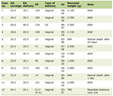 Click to view | Table 1. Frequency of Diagnostic Testing: Laboratory, Imaging, Other |
Demographic information, date of diagnosis, date of symptom onset, medical comorbidities, ALS onset form, and vital status (living or deceased) were obtained from the ALS Natural History Consortium’s dataset, since this information was previously collected as part of the larger, international study. Diagnostic delay, defined as the interval between symptom onset and ALS diagnosis, was calculated and analyzed in relation to (1) the incidence of unnecessary procedural intervention and (2) evaluation by non-neurological specialists.
Cost assessment
Procedures were categorized as inpatient or outpatient and assigned corresponding cost values using the US Medicare Procedure Price Lookup Tool and the Medicare Claims Database [15, 16]. All procedural costs were based solely on US Medicare coverage data, as private insurance claims databases were not accessible without a large fee. Outpatient surgical procedure costs were estimated using the Medicare Procedure Price Lookup Tool, which provided national cost averages for hospital outpatient departments across the US Current Procedural Terminology (CPT) codes and were used to identify specific procedure types. Inpatient procedure costs were obtained through the US Medicare Claims Database, which provided the total discharge costs for an inpatient hospital stay following intervention. Diagnosis-related group (DRG) codes were used to identify specific inpatient procedure types; of note, cost data obtained from the Medicare Claims Database were institution-specific due to access limitations, including a large, required fee. The following interventions were excluded from the cost estimate due to insufficient publicly available information: Gamma knife radiosurgery (n = 1), intravenous immune globulin (IVIG) infusion (n = 2), and steroid treatments (n = 5; including two intravenous, two nasal, and one oral administration). Although infrequent in the cohort, exclusion of these procedures may result in an underestimation of total costs. Accordingly, all procedural cost estimates reported in this study are based on the subset of patients for whom cost estimates were available.
Descriptive cost estimates of diagnostic assessments were obtained from hospital-specific price transparency documents. Genetic testing as well as multiple laboratory assessments (Lyme antibodies, neurofilament light chain, monoclonal gammopathy, angiotensin-converting enzyme, calcium/parathyroid hormone, and pernicious anemia cascade; approximately one-quarter of the laboratory assessments evaluated) were not included in the cost estimation due to the lack of available data within the transparency documents. Table 1 summarizes the diagnostic modalities recorded for the patient sample, with asterisks indicating which tests were included in the cost estimation. Genetic testing is shown in Figure 1 for completeness but is not included in cost estimates.
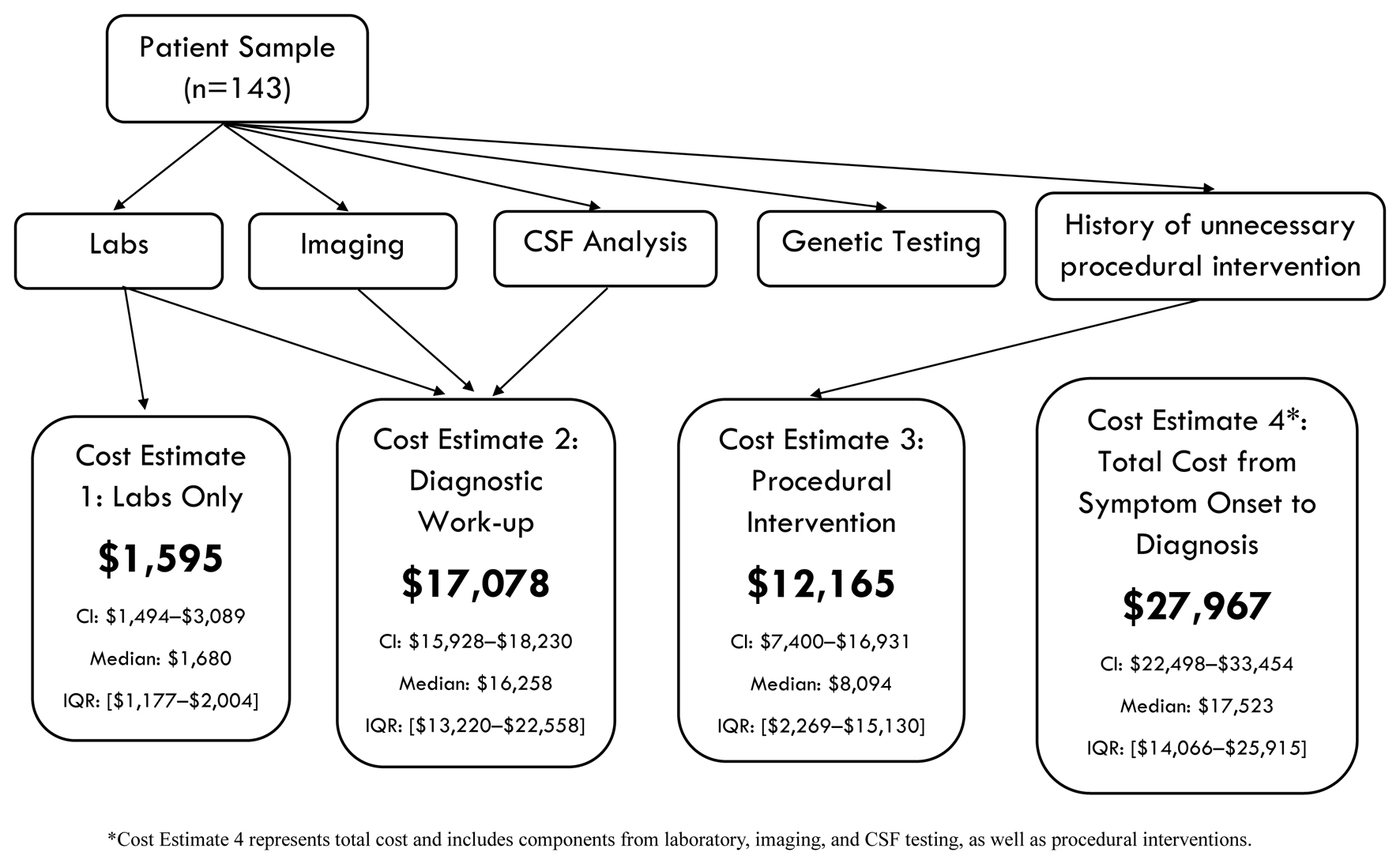 Click for large image | Figure 1. Cost estimates from study sample: diagnostic testing and unnecessary procedures. Schematic illustrating cost inputs and corresponding estimates included in the analysis, including diagnostic testing and unnecessary procedures from symptom onset to ALS diagnosis. ALS: amyotrophic lateral sclerosis. |
For patients with multiple prior interventions, procedure costs were aggregated to determine the total cost per individual. These totals were then summed and averaged across the sample to calculate the mean costs per patient. Costs are reported in the following categories: (1) cost of unnecessary procedural intervention, (2) cost of diagnostic workup (includes imaging, CSF, and laboratory costs only), (3) cost of laboratory diagnostic workup (laboratory costs only), and (4) total costs from symptom onset to ALS diagnosis (procedures, imaging, CSF, and laboratory). Category four only includes the subset of patients who underwent procedural interventions and for whom procedural cost estimates were available. To further clarify, diagnostic workup costs were calculated for all eligible patients, whereas procedural intervention costs and total costs (procedural intervention plus diagnostic workup) were calculated only for the subset of patients with available procedural cost estimates. These cost estimates are descriptive and intended to provide context; this is not a formal cost-effectiveness or national-level value analysis.
| Results | ▴Top |
Demographics
There were no statistically significant differences in gender, race, ethnicity, or age at disease onset between patients who underwent procedural intervention (“procedure group”) and those who did not (“no-procedure group”). In both groups, the majority of participants were male, identified as White, and identified as non-Hispanic. Regarding insurance coverage, 63% of patients in the procedure group were privately insured (27/43), with the remainder covered by public insurance (16/43) at the time of intervention.
The form of ALS onset did not differ significantly across groups, with similar distributions of axial, bulbar, generalized, and limb-onset presentations. Medical comorbidities were also comparable between groups, with similar frequencies of hypertension, hyperlipidemia, asthma, sleep apnea, anxiety, and depression. Mortality rates were nearly equivalent between groups at the time of analysis. A comprehensive summary of demographic data is provided in Table 2.
Click to view | Table 2. Demographics and Sample Characteristics (n = 143) |
Procedural intervention
Among the 143 patients within our sample, nearly one-third underwent procedural intervention prior to ALS diagnosis. Of these patients, a substantial proportion underwent more than one prior procedure, each reported separately below.
The most common surgical procedure was spinal surgery, including spinal fusion and spinal decompression, followed by median and ulnar nerve decompression and knee arthroplasty. Less commonly reported surgical interventions included Gamma knife radiosurgery for the treatment of brain meningioma, total hip arthroplasty, diagnostic shoulder arthroscopy, bilateral meniscus repair, hammer toe correction, and hand procedures such as trigger finger release and ganglion cyst removal.
Among the reported non-surgical interventions were steroid injections (back, knee, and shoulder), endoscopic procedures with or without biopsy, muscle biopsy, as well as cardiac and urologic interventions including cardiac catheterization and vagal stimulation of the bladder. One patient underwent a comprehensive cardiac workup for dyspnea via electrocardiogram, transthoracic echocardiogram, and stress test with perfusion imaging. Procedural intervention frequencies are summarized in Table 3.
Click to view | Table 3. Frequency and Cost of Unnecessary Procedural Intervention |
Moreover, among patients who did not undergo procedural intervention, over one-third were nonetheless seen prior to ALS diagnosis by non-neurologist specialists for surgical consultation, including referrals to neurosurgery, orthopedics, and otolaryngology. Referral patterns are summarized in Table 3.
Of the 43 patients who underwent procedural intervention, cost data were available for procedures experienced by 32 patients. Among these 32 patients, the average estimated cost of unnecessary procedural intervention was US$12,165 (95% confidence interval (CI): US$7,400–US$16,931; n = 32; median = US$8,094 (interquartile range (IQR): US$2,269–US$15,130)). For reference, this value is only slightly less than the 2024 reported poverty line for individuals, at US$15,060 [17]. The most expensive intervention was non-cervical spinal fusion, costing US$36,318 for those on Medicare, followed by cervical fusion at US$17,956. The distribution of procedural intervention costs per patient is shown in Figure 2 and estimated costs by procedure type are summarized in Table 3.
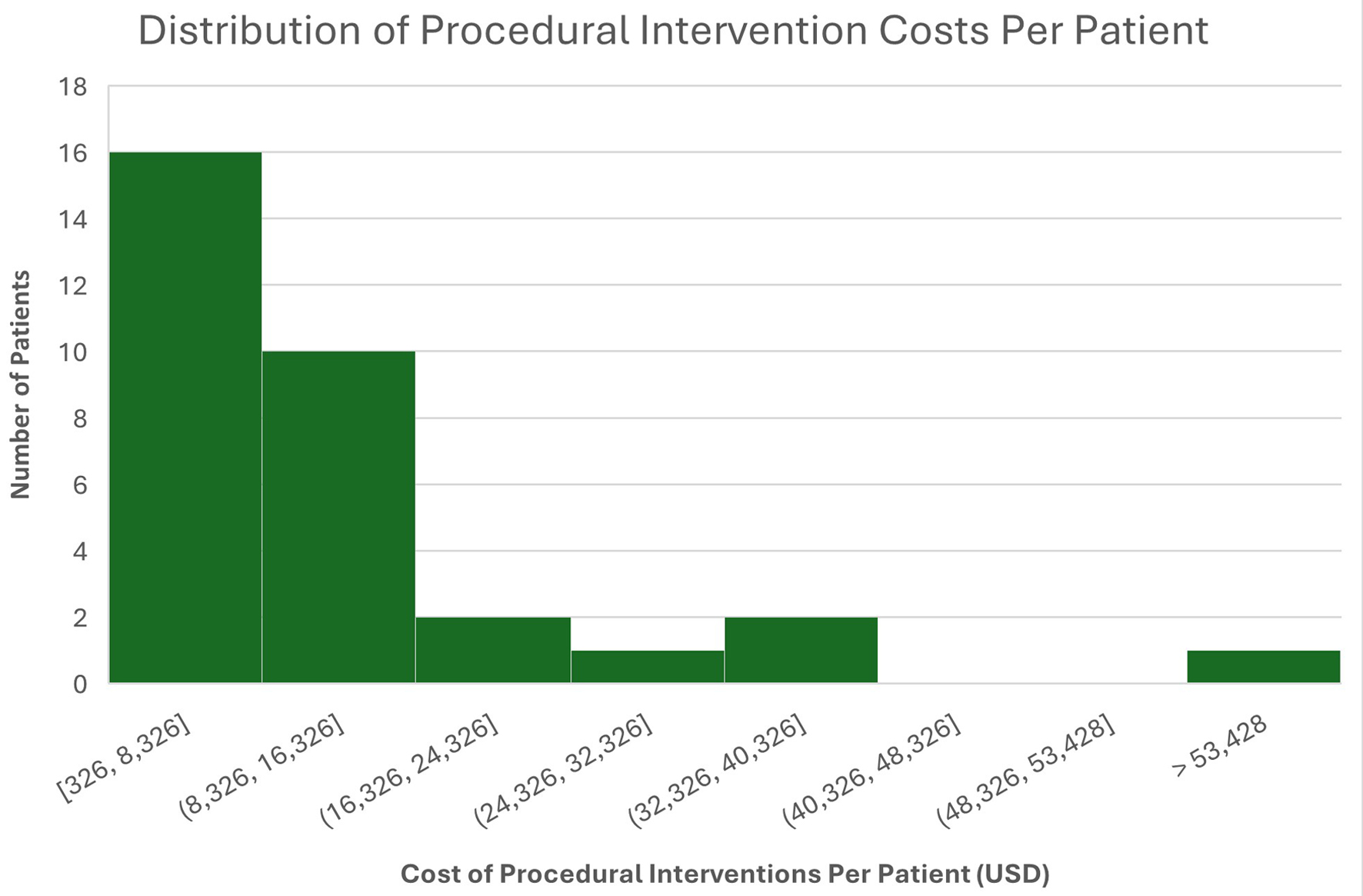 Click for large image | Figure 2. Distribution of procedural intervention costs per patient. Histogram showing estimated costs of unnecessary procedures prior to ALS diagnosis among patients in the cohort. Costs are reported in US dollars based on Medicare-derived estimates. ALS: amyotrophic lateral sclerosis. |
Time to ALS diagnosis
Diagnostic delay did not significantly differ between the procedure and no-procedure groups. Although not statistically significant, the time from symptom onset to ALS diagnosis was longer in the procedure group (mean: 19.2 months) compared to the no-procedure group (mean: 15.1 months; P = 0.201). Two sub-analyses were additionally performed. First, the procedure group was subdivided into patients who underwent surgical procedures (e.g., knee replacement) and those who underwent non-surgical procedures (e.g., endoscopy) to assess whether procedural severity influenced diagnostic delay. Although the overall difference in diagnostic duration remained non-significant after stratification, patients who underwent surgical procedures had a numerically longer mean diagnostic delay than those who underwent non-surgical procedures. Specifically, patients with surgical procedures experienced a mean diagnostic delay of 22.1 months (P = 0.111), whereas those who underwent non-invasive procedures experienced a mean delay of 15.7 months (P = 0.997). Comparisons were performed using the Wilcoxon rank-sum test to account for the presence of outliers.
Second, we assessed whether patients who were evaluated by non-neurologists (e.g., orthopedic surgeons, neurosurgeons, or otolaryngologists) prior to ALS diagnosis experienced greater diagnostic delays compared to those referred directly to a neurologist or ALS specialist. No statistically significant difference was observed; patients who underwent additional non-neurologist referrals (referred to as “Non-Neuro Referral group”) experienced an average diagnostic delay of 16 months (P = 0.405).
Diagnostics
An MRI of the brain and spinal cord (full or partial) was ordered for the majority of patients undergoing a diagnostic workup for ALS symptoms. Additional imaging was ordered for nearly one-third of the patients, most commonly computed tomography (CT) of the brain/head or spinal cord, CT chest/abdomen/pelvis, X-ray of the spine, shoulder, and hip, and DAT scan. Please refer to Table 1 for a summary of the above data, as well as data for less commonly performed imaging modalities. CSF analysis was less commonly utilized than imaging in the ALS diagnostic workup and was reported in approximately one-third of the patient sample. Lastly, nearly one-half of the patient sample underwent genetic testing as part of the ALS diagnostic workup.
Regarding laboratory assessment for ALS symptom presentation, the following tests were most frequently ordered: complete blood count, comprehensive metabolic panel, vitamin B12, thyroid stimulating hormone, serum protein electrophoresis, copper, paraneoplastic panel, Lyme antibodies, anti-MUSK and acetylcholine receptor antibodies, autoimmune panel, creatinine kinase, and ganglioside. Diagnostic testing patterns and frequencies as well as less frequently ordered laboratory tests are summarized in Table 1.
The average cost incurred per patient for laboratory testing alone was US$1,595 (95% CI: US$1,494–US$3,089; n = 143; median = US$1,680 (IQR: US$1,177–US$2,004)). The average diagnostic workup cost, including laboratory tests, MRI brain, MRI spine, and CSF analysis, was US$17,078 per patient (95% CI: US$15,928–US$18,230; n = 143; median = US$16,258 (IQR: US$13,220–US$22,558)). Among the 32 patients with available procedural cost data, the average total cost per patient (procedural intervention plus diagnostic testing) rose to US$27,976 per patient (95% CI: US$22,498–US$33,454; n = 32; median = US$17,523 (IQR: US$14,066–US$25,915)). Cost inputs and corresponding estimates are shown in Figure 1.
| Discussion | ▴Top |
Study purpose and findings
In this study, nearly one-third of patients underwent unnecessary procedural interventions prior to ALS diagnosis, most commonly spinal and upper extremity nerve surgeries, and both of these interventions and the diagnostic workup were associated with substantial healthcare costs. It is important to note that these interventions often occur in the context of diagnostic uncertainty and may be clinically appropriate at the time of decision-making given the broad differential diagnosis of ALS. Prior studies have demonstrated that misdiagnosis within non-neurological specialties can lead to unnecessary procedures, including spinal fusions, knee surgeries, and carpal tunnel releases [4, 11, 12]. For example, Kraemer et al found that 12% of a 100-patient sample underwent inappropriate surgery, which was associated with longer diagnostic delays. Similarly, Srinivasan et al reported that 13% of a 260-patient cohort received unnecessary surgeries—most commonly spinal, knee, and carpal tunnel operations [12]. While the overall frequency of intervention was higher in our cohort compared to prior research, the types of interventions were consistent. Notably, some procedures reported by Srinivasan et al, such as sinus surgery and tonsillectomy, were not observed in our cohort. These findings suggest that misdiagnosis leading to invasive interventions may be an issue within ALS, highlighting opportunities to improve diagnostic accuracy and reduce patient burden.
This study also provides descriptive estimates of the costs associated with unnecessary procedures and exclusionary testing preceding ALS diagnosis, based on the subset of patients for whom procedural cost data were available. These estimates are not intended as a formal cost-effectiveness analysis, but rather to highlight the additional burden placed on the healthcare system.
Diagnostic delay within ALS
There is a substantial body of research focused on the issue of delayed ALS diagnosis, examining the underlying causes and offering potential solutions. A literature review of studies published between 1990 and 2020 found that the average time to diagnosis ranged from 10 to 16 months after symptom onset [1]. Notably, the study by Kraemer et al is the only study, to our knowledge, that demonstrated a significant increase in diagnostic delay for patients who underwent unnecessary procedural interventions [4]. We therefore anticipated comparable results, hypothesizing that procedural intervention would prolong the interval from symptom onset to diagnosis. However, diagnostic delay did not significantly differ between patients who underwent procedural interventions and those who did not within our cohort. While subgroup trends suggested longer delays among patients undergoing more invasive, surgical procedures, these findings were not statistically significant and should be interpreted cautiously. These results may reflect limited sample size, but alternative explanations (including true lack of association) must also be considered [18]. Additionally, differences in study populations, referral patterns, and healthcare systems may contribute to discrepancies across studies. Our cohort was derived from a single academic ALS center, whereas larger multicenter cohorts may better capture variability in diagnostic pathways across institutions and geographic regions. Such studies may be better powered to detect modest differences in diagnostic delay associated with unnecessary procedural interventions. Together, larger sample sizes and more stringent inclusion criteria for procedural invasiveness may improve the ability to detect differences in diagnostic delay.
We believe that even a modest delay—as brief as 4 months—can meaningfully impact ALS prognosis, given the disease’s rapid progression and limited therapeutic window. Timely diagnosis is essential to reducing disease burden as it enables early integration into multidisciplinary care, promoting comprehensive management by engaging other specialties such as respiratory therapy and social work [5]. Furthermore, early disease detection facilitates timely entry into clinical trials. Given that currently Food and Drug Administration (FDA)-approved therapies can slow disease progression, early diagnosis and access to clinical trials are vital for improving outcomes and reducing physical disability [6].
Diagnostic testing within ALS
While healthcare expenditures can be challenging to conceptualize without an appropriate context, it is important to recognize that ALS is a clinical diagnosis, and thus one could argue that, in principle, the cost of achieving a correct diagnosis “should be” minimal. In theory, clinical reasoning should guide providers away from alternative diagnoses, as these conditions typically present with features distinct from the pure motor deficits characteristic of ALS (e.g., neuropathy in hypothyroidism or vitamin B12 deficiency). However, the preference for exclusionary testing rather than clinical judgment likely stems from the severity of ALS, which demands certainty in diagnosis, as well as the availability of treatments for alternative conditions. Thus, comprehensive diagnostic testing is often clinically justified, and such evaluations are necessary to both exclude similarly presenting conditions and to satisfy established diagnostic criteria. Additionally, because this study includes only patients ultimately diagnosed with ALS, it does not capture individuals in whom diagnostic testing identified an alternative diagnosis. As such, the extent of testing observed likely reflects appropriate efforts to exclude ALS mimics, rather than unnecessary evaluation alone. We therefore are not suggesting that diagnostic testing should be eliminated or that our findings should discourage clinically appropriate evaluation. Rather, we seek to highlight the extent of diagnostic testing and procedural intervention that currently occurs in the setting of diagnostic uncertainty, with the goal of informing future efforts to improve diagnostic accuracy while optimizing resource utilization.
Importantly, despite the frequent use of exclusionary testing, our dataset lacked a clear pattern to diagnostic assessment, with some patients undergoing far more tests than others. This variability suggests an opportunity for standardization. Future work may explore whether structured diagnostic approaches or clinical support tools could help streamline evaluation while maintaining diagnostic accuracy.
Proposed solutions: combating misdiagnosis
Diagnosing ALS remains difficult due to heterogeneous symptom presentations, frequent overlap with other neurological and musculoskeletal conditions, and the lack of a definitive diagnostic test [19]. Recent advances in serum neurofilament light chain (NfL) have shown promise in improving diagnostic certainty for ALS when used alongside established clinical diagnostic criteria. Although NfL is not disease-specific and therefore cannot independently establish the diagnosis, a recent study suggests that incorporating serum NfL into existing diagnostic frameworks, such as the Gold Coast Criteria, may facilitate earlier recognition of ALS and improve diagnostic accuracy in patients with provisional diagnoses [20, 21].
Addressing ALS misdiagnosis requires proper training for non-neurologists to recognize when a referral to an ALS specialist is warranted. While non-neurologists—and even neurologists who do not specialize in ALS—are not expected to establish a definitive ALS diagnosis, they should possess sufficient clinical knowledge to recognize red-flag symptoms and initiate prompt specialist referral. Several clinical tools have been developed to aid recognition, including the ThinkALS toolkit [22], designed to assist neurologists in screening for ALS-specific symptoms, and the Red Flag Diagnosis Tool [23], which organizes symptom patterns based on onset form and guides decision-making about further workup. The emergence of such resources underscores the critical need for early ALS diagnosis and the growing public and medical interest in ensuring accurate evaluation.
Limitations
This study has several limitations. The principal limitation of this study lies in the constrained availability of price data. Obtaining cost data presented significant challenges. We engaged in multiple discussions with Medicare database representatives, but full access to comprehensive national datasets required prohibitively high fees. When limited, short-term access was granted at no cost; it was restricted to a single institution, preventing us from retrieving national average data. These barriers underscore the broader issue of limited price transparency in the United States and its implications not only for patients but also for scientific and health policy research.
Due to these challenges, we relied on publicly available Medicare data even though over half of the patients in the sample were covered by private insurance at the time of their procedures. Additionally, the Medicare Procedure Price Lookup Tool has limitations of its estimates, such that these estimates do not incorporate professional fees from all involved providers, or additional costs related to overhead fees. Additionally, due to the limited access to comprehensive price data, we used multiple data sources to estimate procedural costs. For example, laboratory assessment costs and inpatient procedural costs were calculated using hospital-specific data, i.e., data from a single institution, while outpatient procedure costs were estimated using national averages from the Medicare Procedure Price Lookup Tool. Because the range of services in each of these databases varied significantly, we could not apply a single method to estimate all costs. This variability is important to note, particularly as the study was conducted at a high-resource institution with a case mix index (CMI) of 1.49, a measure of patient complexity and resource utilization, which likely reflects higher average costs per procedure compared to other centers across the US.
Because cost and procedural data were obtained from a single institution with a relatively high CMI, our findings may not fully generalize to other clinical settings. Diagnostic practices, referral pathways, and access to multidisciplinary ALS teams can vary substantially across institutions and geographic regions, influencing both the frequency and type of diagnostic testing and procedural interventions performed prior to diagnosis. Therefore, distinct centers will experience unique cost structures and diagnostic trajectories. In addition, variations in institutional pricing and reimbursement policies can further affect cost estimates. These factors together highlight that the estimates presented here are descriptive and are intended to contextualize the broader issue of diagnostic costs in ALS. Furthermore, diagnostic pathways may differ between metropolitan and rural or underserved regions, where access to neurologists and ALS specialty centers is often more limited. Such differences could contribute to longer diagnostic delays, more specialist referrals, or a greater likelihood of unnecessary procedural interventions. Future multicenter studies examining geographic variation in the ALS diagnostic pathway are warranted.
Additionally, procedural cost estimates were available for only 32 of the 43 patients who underwent unnecessary procedural interventions. Because cost data were unavailable for several procedures within the databases used for cost estimation, the reported average procedural costs and total costs may underestimate or overestimate the true economic burden.
Further limitations include the retrospective nature of the study, specifically that retrospective assessment of procedural necessity cannot fully capture the clinical context or rationale at the time of decision-making; procedures may have been clinically justifiable at the time they were performed. Although we use the term “unnecessary” for consistency with prior literature, this designation was made retrospectively after the final ALS diagnosis was established and is therefore inherently subject to hindsight bias. Furthermore, while we were able to determine whether patients were evaluated by non-neurologist specialists prior to ALS diagnosis, inconsistent documentation within retrospective medical records prevented reliable quantification of the total number of neurologists and non-neurologist providers involved in each patient's diagnostic pathway. Future prospective studies should examine whether the number and sequence of specialist evaluations contribute to diagnostic delay and healthcare costs.
Conclusions
In conclusion, the diagnostic pathway preceding ALS diagnosis is often characterized by broad evaluation and, in some cases, procedural interventions, which are associated with increased healthcare costs. While these evaluations are frequently clinically appropriate given the complexity of ALS diagnosis, our findings highlight variability in diagnostic approaches. Further research is needed to better define diagnostic pathways that balance diagnostic accuracy, efficiency, and cost.
Acknowledgments
The authors thank Dr. Robert Kalb, Dr. Robert Sufit, Dr. Eric Pioro and additional study personnel involved in the ALS Natural History Study. Their efforts in patient care and data collection were essential to the development of this secondary analysis.
Financial Disclosure
This research received no external funding.
Conflict of Interest
None of the authors has any conflict of interest to disclose.
Informed Consent
Written informed consent was obtained from all participants for inclusion in the ALS/MND Natural History Consortium Study, and for the use of their clinical data for research purposes.
Author Contributions
TS wrote the main manuscript text, performed data collection and processing, statistical analysis, and prepared tables and figures. SAD oversaw study concept and design, acquisition of data, medical writing, and interpretation of analysis. HCY and ES had a major role in data acquisition, informed consent process, and assisted with manuscript writing. AB and AS performed statistical analyses and assisted in manuscript writing. All authors read and revised the manuscript and agreed to the final version.
Data Availability
The data underlying this study consist of patient medical records reviewed as part of the ALS/MND Natural History Consortium. De-identified aggregate data supporting the findings of this study are available from the corresponding author upon reasonable request.
Declaration of AI Use
Artificial intelligence tools (e.g., ChatGPT by OpenAI) were used minimally during the preparation of this manuscript, specifically for occasional grammar suggestions and phrasing refinements. All content, interpretation, and critical thinking were completed by the authors.
Abbreviations
ALS: amyotrophic lateral sclerosis; CI: confidence interval; CMI: case mix index; CPT: Current Procedural Terminology; CSF: cerebrospinal fluid; CT: computed tomography; DAT: dopamine transporter; DRG: diagnosis-related group; FDA: Food and Drug Administration; IQR: interquartile range; IVIG: intravenous immune globulin; MRI: magnetic resonance imaging; NfL: neurofilament light chain
| References | ▴Top |
- Richards D, Morren JA, Pioro EP. Time to diagnosis and factors affecting diagnostic delay in amyotrophic lateral sclerosis. J Neurol Sci. 2020;417:117054.
doi pubmed - Gwathmey KG, Corcia P, McDermott CJ, Genge A, Sennfalt S, de Carvalho M, Ingre C. Diagnostic delay in amyotrophic lateral sclerosis. Eur J Neurol. 2023;30(9):2595-2601.
doi pubmed - Brotman RG, Moreno-Escobar MC, Joseph J, Munakomi S, Pawar G. Amyotrophic lateral sclerosis. In: StatPearls. Treasure Island (FL) ineligible companies. 2026.
pubmed - Kraemer M, Buerger M, Berlit P. Diagnostic problems and delay of diagnosis in amyotrophic lateral sclerosis. Clin Neurol Neurosurg. 2010;112(2):103-105.
doi pubmed - Vasta R, De Mattei F, Tafaro S, Canosa A, Manera U, Grassano M, Palumbo F, et al. Changes to average survival of patients with amyotrophic lateral sclerosis (1995-2018): results from the Piemonte and Valle d'Aosta registry. Neurology. 2025;104(8):e213467.
doi pubmed - Zoccolella S, Beghi E, Palagano G, Fraddosio A, Samarelli V, Lamberti P, Lepore V, et al. Predictors of delay in the diagnosis and clinical trial entry of amyotrophic lateral sclerosis patients: a population-based study. J Neurol Sci. 2006;250(1-2):45-49.
doi pubmed - van Eijk RPA, Westeneng HJ, Nikolakopoulos S, Verhagen IE, van Es MA, Eijkemans MJC, van den Berg LH. Refining eligibility criteria for amyotrophic lateral sclerosis clinical trials. Neurology. 2019;92(5):e451-e460.
doi pubmed - Turner MR, Talbot K. Mimics and chameleons in motor neurone disease. Pract Neurol. 2013;13(3):153-164.
doi pubmed - Donaghy C, Dick A, Hardiman O, Patterson V. Timeliness of diagnosis in motor neurone disease: a population-based study. Ulster Med J. 2008;77(1):18-21.
pubmed - Stetkarova I, Ehler E. Diagnostics of amyotrophic lateral sclerosis: up to date. Diagnostics (Basel). 2021;11(2):231.
doi pubmed - Kollewe K, Koerner S, Ilsemann J, Mohammadi B, Krampfl K, Dengler R, Petri S. Nerve compression syndromes in ALS: a retrospective analysis in 554 patients. Amyotroph Lateral Scler. 2011;12(5):349-351.
doi pubmed - Srinivasan J, Scala S, Jones HR, Saleh F, Russell JA. Inappropriate surgeries resulting from misdiagnosis of early amyotrophic lateral sclerosis. Muscle Nerve. 2006;34(3):359-360.
doi pubmed - Berry JD, Blanchard M, Bonar K, Drane E, Murton M, Ploug U, Ricchetti-Masterson K, et al. The economic burden of amyotrophic lateral sclerosis: evidence from national healthcare expenditure data. Amyotroph Lateral Scler Frontotemporal Degener. 2023;24(1):1-9.
- Galvin M, Ryan P, Maguire S, Heverin M, Madden C, Vajda A, Normand C, et al. The path to specialist multidisciplinary care in amyotrophic lateral sclerosis: a population- based study of consultations, interventions and costs. PLoS One. 2017;12(6):e0179796.
doi pubmed - Centers for Medicare & Medicaid Services. Procedure Price Lookup (PPL) API. U.S. Department of Health & Human Services.
- Centers for Medicare & Medicaid Services. Web Pricers. U.S. Department of Health & Human Services.
- U.S. Department of Health and Human Services. Annual update of the HHS poverty guidelines. Fed Regist. 2024;89:2961.
- Wasserstein RL, Schirm AL, Lazar NA. Moving to a world beyond “p < 0.05.” Am Stat. 2019;73(suppl 1):1-19.
- Irani SR. Autoimmune neurology: an overview of an evolving subspecialty. Pract Neurol. 2009;9(5):286-97.
- Lu CH, Macdonald-Wallis C, Gray E, Pearce N, Petzold A, Norgren N, Giovannoni G, et al. Neurofilament light chain: a prognostic biomarker in amyotrophic lateral sclerosis. Neurology. 2015;84(22):2247-2257.
doi pubmed - Smith SE, Miller TM, Atkinson A, Pestronk A, Bucelli RC. Integrating serum neurofilament light chain into amyotrophic lateral sclerosis diagnostic criteria. Muscle Nerve. 2026;73(6):990-995.
doi pubmed - Dave K, Oskarsson B, Yersak J, Krauss R, Heiman Patterson T, Lomen Hoerth C, Selig W, et al. Contributions of neurologists to diagnostic timelines of ALS and thinkALS as an early referral instrument for clinicians. Amyotroph Lateral Scler Frontotemporal Degener. 2024.
- Baxter S, McDermott CJ. Decision-making and referral processes for patients with motor neurone disease: a qualitative study of GP experiences and evaluation of a new decision-support tool. BMC Health Serv Res. 2017;17(1):339.
doi pubmed
This article is distributed under the terms of the Creative Commons Attribution 4.0 International License (CC BY 4.0), which permits unrestricted use, distribution, and reproduction in any medium, including commercial use, provided the original work is properly cited.
Journal of Neurology Research is published by Elmer Press Inc.