Journal of Neurology Research, ISSN 1923-2845 print, 1923-2853 online, Open Access
Article copyright, the authors; Journal compilation copyright, J Neurol Res and Elmer Press Inc
Journal website https://jnr.elmerpub.com

Case Report

Volume 16, Number 2, June 2026, pages 122-126


Adult-Onset Reversible Splenial Lesion Syndrome: A Case Series and Review of Age-Related Differences

Figure

↓  Figure 1. Magnetic resonance imaging (MRI) findings of reversible splenial lesion syndrome (RESLES) in adult cases. Rows 1 and 2 (cases 2 and 4 respectively): RESLES type 1, characterized by a lesion confined to the splenium of the corpus callosum (SCC). (a) Diffusion-weighted imaging (DWI) hyperintensity. (b) Corresponding apparent diffusion coefficient (ADC) hypo-intensity, consistent with restricted diffusion. (c, d) Hyperintensity on T2/FLAIR sequences and lack of enhancement post-gadolinium (d). Row 3 (case 5): RESLES type 2, showing the lesion extending from the SCC into the adjacent white matter with no evidence of central nervous system infiltration of Burkitt lymphoma. All lesions exhibited homogeneous hyperintensity on DWI and hypo-intensity on ADC maps, and fully resolved at follow-up.
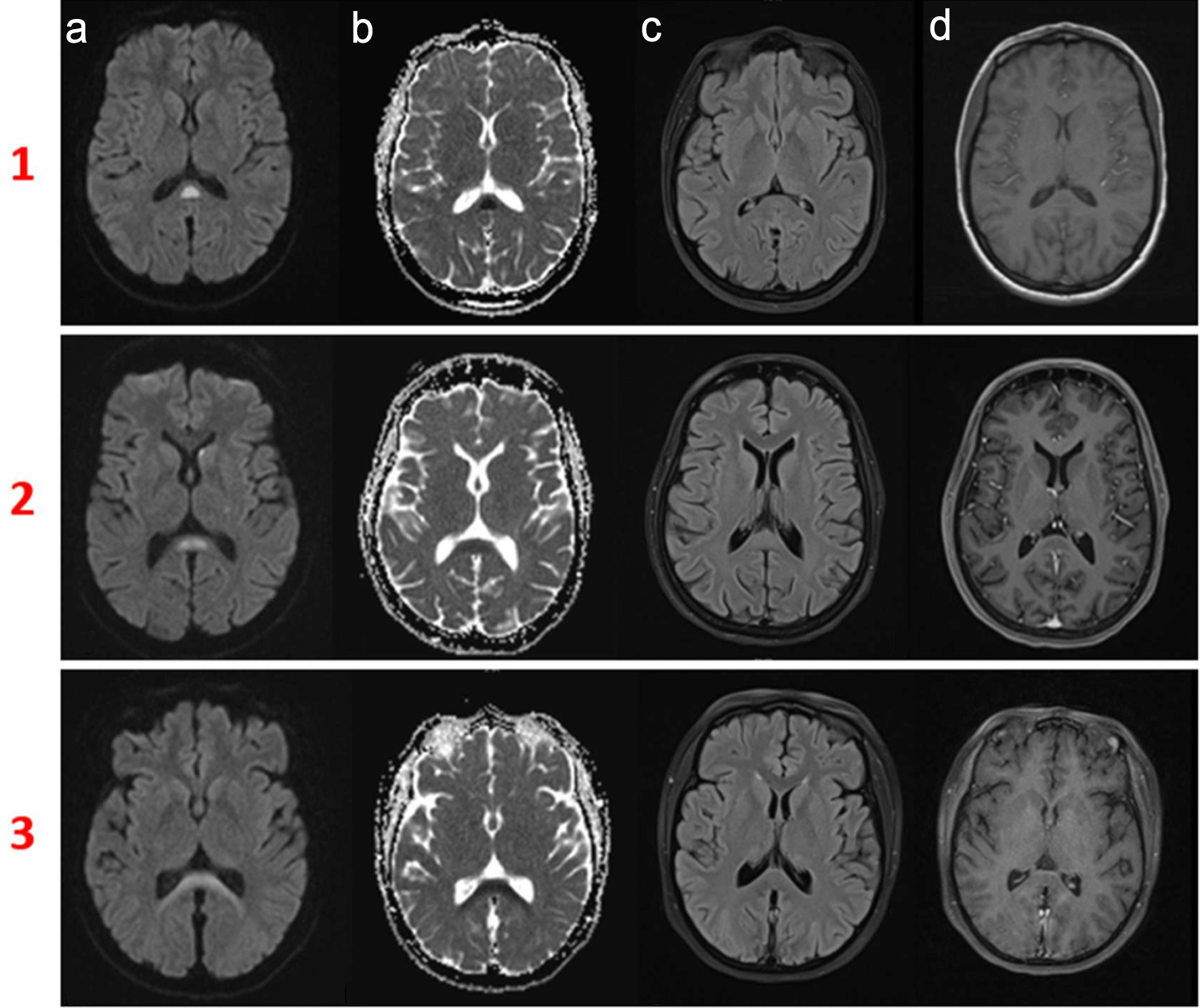
Figure 1.

Table

↓  Table 1. Summary of Clinical Presentations, Underlying Causes, MRI Features, Therapy, and Outcome of the Five Adult-Onset RESLES Cases
 
CaseAge/sexClinical presentationUnderlying/associated conditionMRI findingsTreatmentOutcome
MRI: magnetic resonance imaging; RESLES: reversible splenial lesion syndrome; SCC: splenium of the corpus callosum.
146/MFever and acute respiratory symptoms, later headache, slurred speech, and hearing lossLower respiratory tract infectionSplenial lesion type 1, limited to SCCAntibiotics for respiratory infectionClinical improvement within 1 week; full hearing recovery at 10 months
229/FHeadache and blurred visionChronic renal failure later extensive cerebral venous thrombosisInitial SCC lesion type 1, later extensive thrombophlebitis with hemorrhagic transformationVentriculoperitoneal shunt. AnticoagulationComplete regression of SCC lesion and thrombosis at 6 months
331/MAcute abdominal pain and gastrointestinal bleeding. Drowsiness, dysarthria, limb ataxia, and postural tremorsAcute pancreatitis, acute renal failureSCC lesion consistent with RESLES type 2 and acute encephalopathyBlood transfusion, hemodialysis, dual antibioticsFavorable evolution, cerebellar symptoms resolved within 1 month
429/FDrowsiness, headache, slurred speech, later after delivery insomnia and agitationPeri/postpartum stateSplenial lesion of the corpus callosum type 1RisperidoneComplete recovery at 2-month follow-up
530/FA unique seizure then remained asymptomaticBurkitt lymphoma with massive multivisceral involvementSplenial lesion consistent with RESLES type 2 with no CNS infiltrationChemotherapyRemained neurologically asymptomatic at the latest follow-up