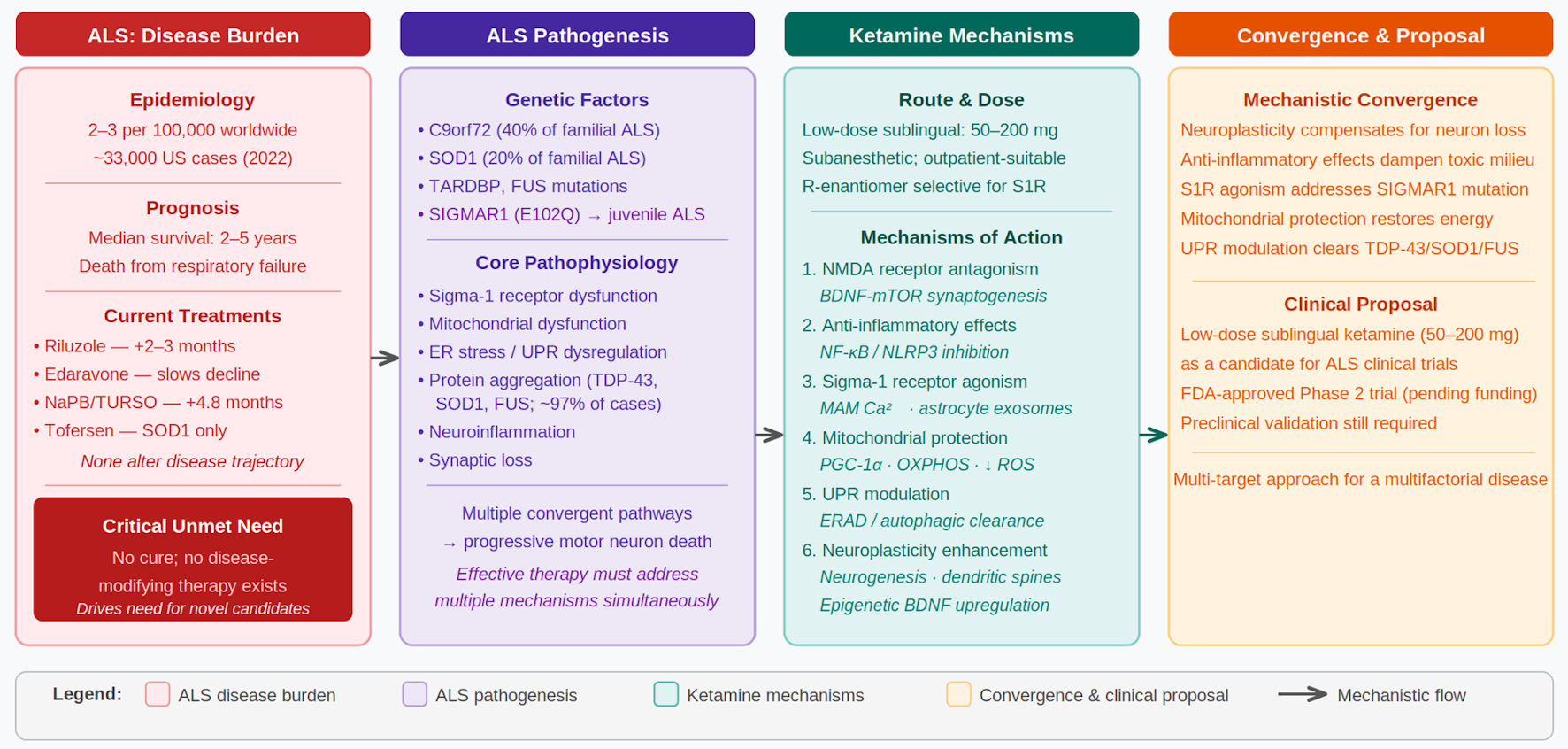
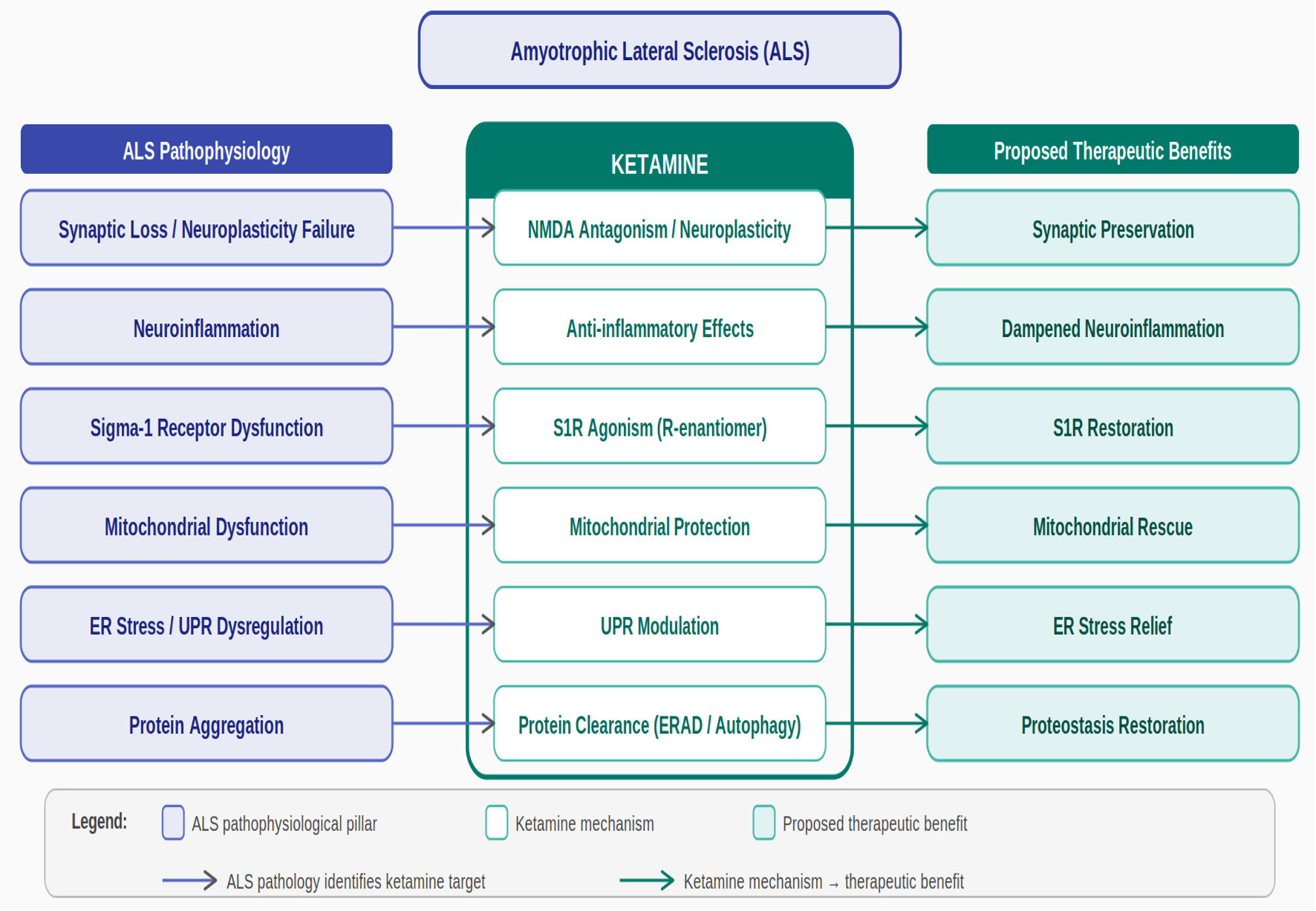
↓ Figure 1. The therapeutic potential of ketamine for ALS: manuscript structure and key concepts. This schematic summarizes the structure and key concepts of the manuscript across four thematic columns. Column 1 (red): ALS disease burden, including epidemiology, prognosis, current FDA-approved treatments, and the critical unmet need. Column 2 (purple): ALS pathogenesis, encompassing genetic factors (C9orf72, SOD1, TARDBP, FUS, SIGMAR1) and core pathophysiological mechanisms: Sigma-1 receptor dysfunction, mitochondrial dysfunction, ER stress/UPR dysregulation, protein aggregation, neuroinflammation, and synaptic loss. Column 3 (teal): ketamine pharmacology, including route and dose (low-dose sublingual, 50–200 mg), enantiomer-specific properties, and six proposed mechanisms of action ordered as they appear in the manuscript. Column 4 (amber): therapeutic convergence and clinical proposal, showing how each ketamine mechanism addresses a corresponding ALS pathophysiological target, and proposing low-dose sublingual ketamine as a candidate for systematic clinical investigation. ALS: amyotrophic lateral sclerosis; BDNF: brain-derived neurotrophic factor; ER: endoplasmic reticulum; ERAD: endoplasmic reticulum–associated degradation; FDA: Food and Drug Administration; MAM: mitochondria-associated endoplasmic reticulum membrane; mTOR: mechanistic target of rapamycin; NF-κB: nuclear factor kappa B; NLRP3: NLR family pyrin domain containing 3; NMDA: N-methyl-D-aspartate; OXPHOS: oxidative phosphorylation; PGC-1α: peroxisome proliferator-activated receptor gamma coactivator 1-alpha; ROS: reactive oxygen species; S1R: sigma-1 receptor; UPR: unfolded protein response.