| Peng et al, 2010 [17] | China | 1 | 100% | 23 | 2 | No | CTX, G-CSF | Positive | 1 | Clinical remission after transplantation and no relapses over 12 months follow-up. |
| Greco et al, 2014 [20] | Italy | 16 | 81.25% | 37 (20–57) | NA | No | BEAM/ATG | Negative: 3; Positive: 10 | 5 | Three cases remained progression- and treatment-free, while in 13 patients, anti-AQP-4Ab antibodies persisted, leading to relapse requiring further treatment. |
| Hoay & Ratnagopal, 2018 [18] | Singapore | 3 | 66.7% | 32 | NA | No | CTX, fludarabine, ATG | Positive: 2 Not tested: 1 | 7.3 (4–13) | All three patients were neurologically stable, with no progression in their EDSS scores, or development of new lesions on their follow-up MRI. |
| Burt et al, 2019 [21] | USA | 13 | 91.6% | 42 (19–51) | 7 | One patient with SLE | BEAM/ATG | Negative: 1; Positive: 11 | 4 (2–5) | 80% remain relapse free at year 5. Two patients remained AQP4-IgG-seropositive relapsed within 2 years of HSCT. |
| Carlisle et al, 2020 [19] | USA | 1 | 100% | 40 | 1 | IBS, depression, and anxiety | BEAM/ATG | Positive | 4 | Mild relapse at 2-year follow-up, started eculizumab. |
| Bruton et al, 2021 [23] | Canada | 3 | 66% | 34 (28–39) | 8.3 (3–13) | No | CTX/RTX/ATG | Positive: 3 | 7.5 (3–10) | Of the three patients, one remained relapse-free for 10 years and became AQP4-IgG seronegative, one relapsed 5 years after aHSCT while remaining AQP4-IgG seropositive and started rituximab at year 6, and one died during follow-up. |
| Vorasoot et al, 2025 [24] | USA | 2 | 100% | 65 (60–70) | 30 | No | Not mentioned | Positive | 10 | Both patients achieved AQP4-IgG seronegativity and relapsed 10 years after aHSCT. |
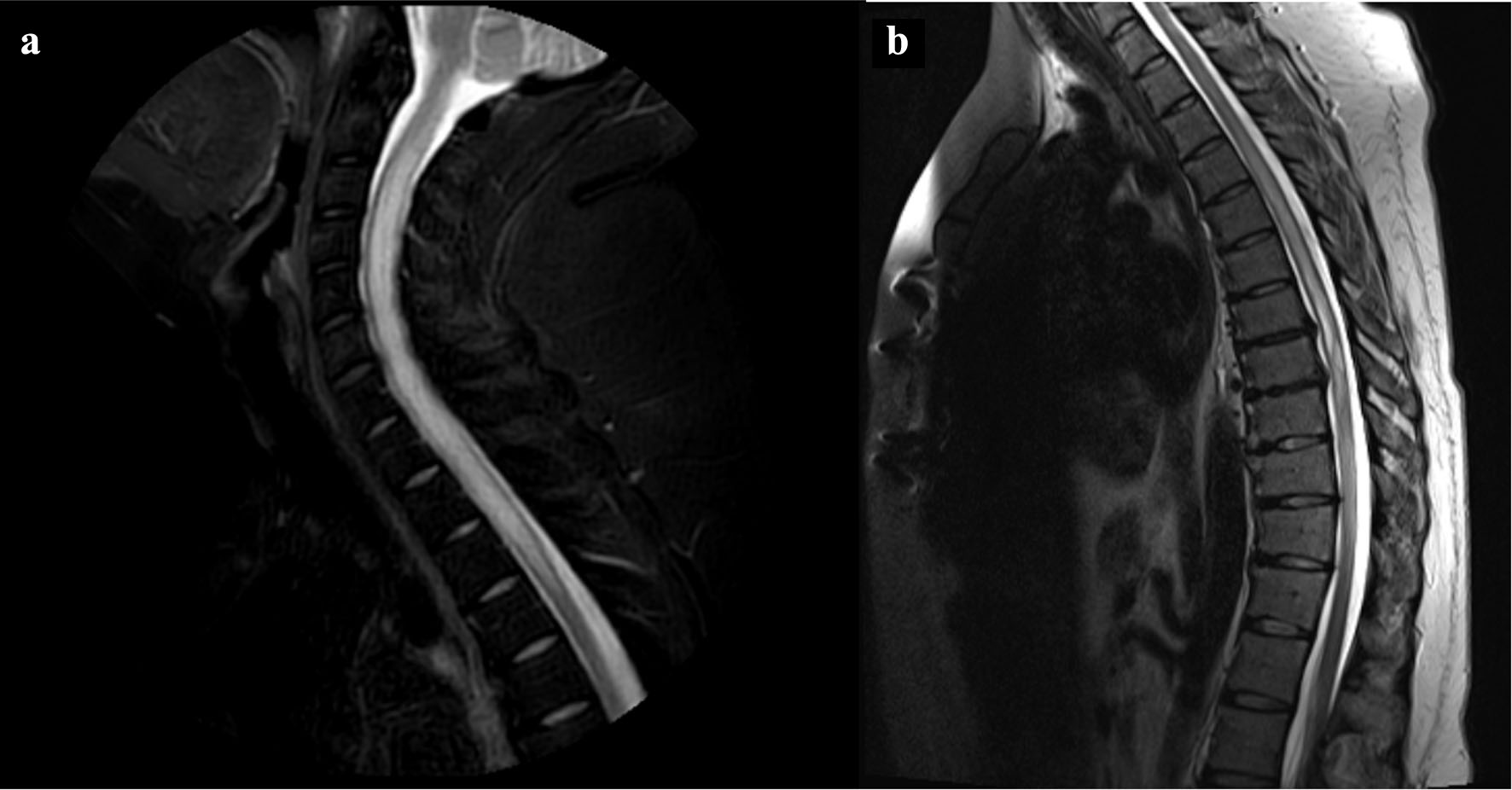
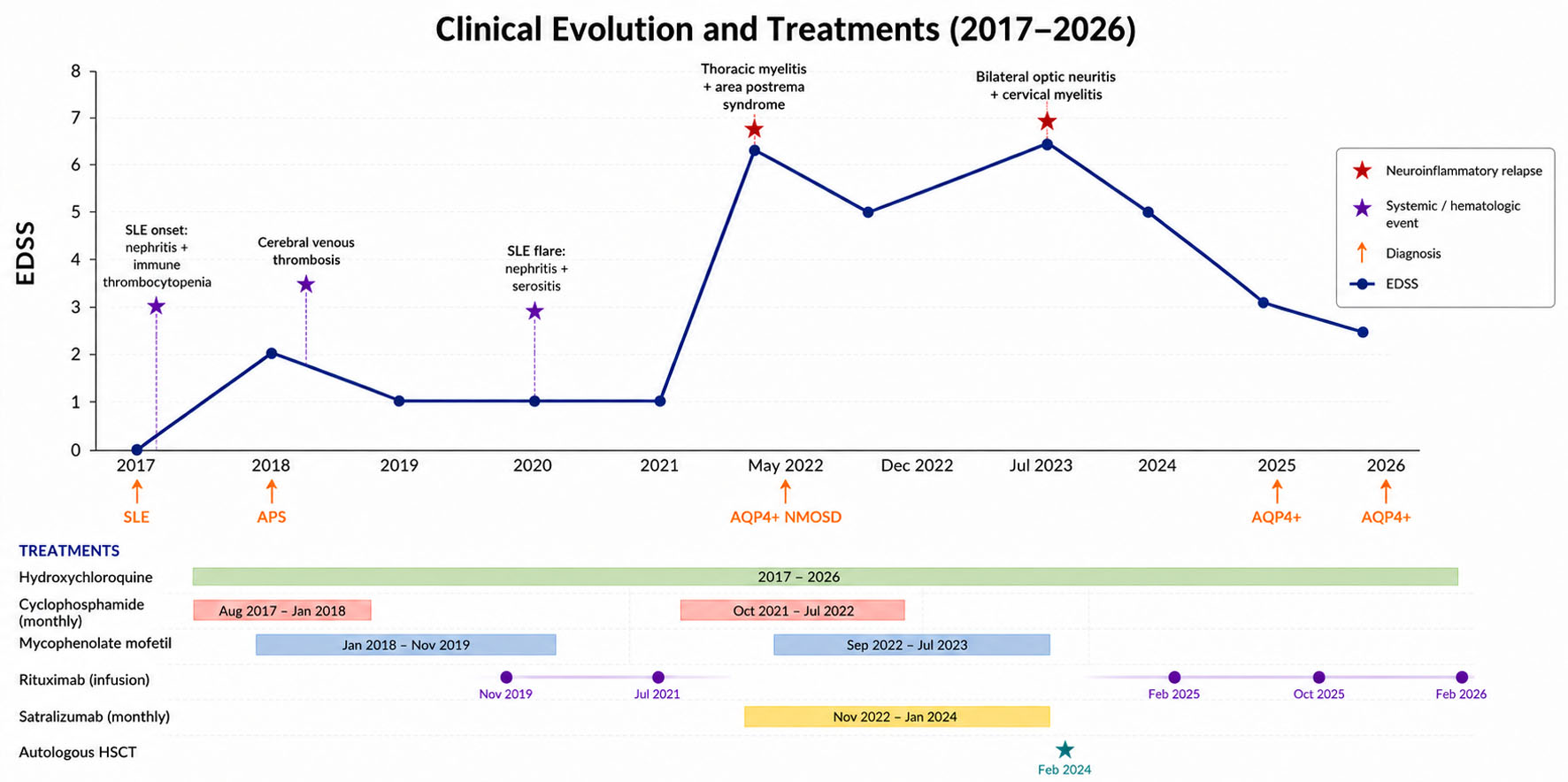
| Zertuche et al, 2026 | Mexico | 1 | 100% | 32 | 3 | SLE, APS, and hypothyroidism | CTX/RTX/ATG | Positive | 2 | Relapse free, remains AQP4 positive at 2-year follow-up. |