| Journal of Neurology Research, ISSN 1923-2845 print, 1923-2853 online, Open Access |
| Article copyright, the authors; Journal compilation copyright, J Neurol Res and Elmer Press Inc |
| Journal website https://jnr.elmerpub.com |
Original Article
Volume 16, Number 4, December 2026, pages 250-262

Modeling Early Neurologic Trajectories After Elevated Leg Positioning in Acute Moderate Ischemic Stroke: A Secondary Analysis of the LEG-UP Randomized Feasibility Study
Kayode Ahmeda, b, c  , Benjamin Woldena, Mitchell Woldena
aDepartment of Clinical Research, University of Jamestown, Jamestown, ND, USA
bDepartment of CNS Radiation Oncology Research, The University of Texas MD Anderson Cancer Center, Houston TX, USA
cCorresponding Author: Kayode Ahmed, Department of Clinical Research, University of Jamestown, Jamestown, ND, USA
Manuscript submitted August 11, 2026, accepted October 8, 2026, published online November 7, 2026
Short title: Neurologic Trajectories After ELP
doi: https://doi.org/10.14740/jnr1146
| Abstract | ▴Top |
Background: Elevated leg positioning (ELP) is a noninvasive intervention hypothesized to augment venous return and cerebral perfusion in acute ischemic stroke. The association between ELP and early neurologic recovery has not been established, and prior positioning trials have not demonstrated plausible functional benefit. We evaluated the association between randomized assignments to ELP and early neurologic trajectory, assessed using the day-7 National Institutes of Health Stroke Scale (NIHSS) after adjusting for baseline neurologic severity.
Methods: This exploratory secondary analysis used individual participant data from LEG-UP, a randomized, open-label, blinded-endpoint feasibility study of 50 participants with acute moderate ischemic stroke randomized 1:1 to ELP or standard positioning. The primary outcome of day-7 NIHSS was analyzed by analysis of covariance (ANCOVA) adjusted for baseline NIHSS, with robust (HC3), bootstrap, and permutation sensitivity analyses. Early neurologic deterioration, 90-day modified Rankin Scale (mRS) score, and mortality were assessed as exploratory outcomes.
Results: Among the 50 participants, the mean baseline NIHSS score was slightly higher in the ELP group than in the control group (11.2 vs. 10.4). The unadjusted day-7 NIHSS score was 8.0 with ELP and 8.9 with control (difference, −0.92; 95% confidence interval (CI), −3.49 to 1.65). After adjustment for baseline NIHSS, the mean day-7 score was 7.45 (95% CI, 6.67 to 8.22) with ELP and 9.39 (95% CI, 8.62 to 10.17) with control (adjusted difference, −1.95; 95% CI, −3.04 to −0.85; P = 0.0008); sensitivity analyses yielded similar estimates (bootstrap 95% CI, −2.98 to −0.84). No episodes of early neurologic deterioration occurred in either group (0 of 25 participants). Among the 47 participants with 90-day follow-up data, which included seven patients who had died by 90 days (three in the ELP group and four in the control group), an mRS score of 0 to 2 occurred in 14 of 24 participants (58.3%) in the ELP group and 11 of 23 participants (47.8%) in the control group (risk difference, 10.5 percentage points; 95% CI, −16.9 to 35.8). Treatment was completed without interruption in 21 of 25 participants (84%) assigned to ELP.
Conclusions: In this exploratory analysis, treatment with ELP was associated with a lower adjusted day-7 NIHSS score compared with control. The unadjusted between-group difference was small and imprecise and estimates at 90 days were uncertain. The clinical importance of a 2-point difference in NIHSS score has not been established. These findings are hypothesis-generating and do not establish the efficacy or safety of ELP. A larger, blinded trial with a functional primary outcome is warranted.
Keywords: Acute moderate ischemic stroke; Elevated leg positioning; NIHSS; Early neurologic trajectory; Analysis of covariance; Feasibility trial; LEG-UP
| Introduction | ▴Top |
Acute ischemic stroke is characterized by dynamic changes in cerebral perfusion and neurologic function during the first hours and days after arterial occlusion. Prognosis is influenced by the location and size of the occluded vessel, the extent of collateral flow, and reperfusion time [1, 2]. Although reperfusion therapies have transformed care for selected patients, many remain vulnerable to persistent deficits and infarct progression. Simple interventions capable of supporting cerebral perfusion during this window could have broad applicability.
Positioning is an attractive intervention strategy because it is inexpensive, rapidly deployable, nonpharmacologic, and applicable across diverse settings. Unlike many acute stroke interventions, positioning may exert its effects by directly modifying cerebral perfusion. Cerebral blood flow (CBF) is position-dependent in acute ischemic stroke. Bedside diffuse correlation spectroscopy has demonstrated that lowering the head of bed from 30° to flat increases ipsilesional frontal cortical CBF by approximately 17%, although individual responses vary and occasionally paradoxically reverse [3]. A systematic review of 21 studies similarly found that flatter positioning generally increases CBF velocity in the ischemic hemisphere, with a pooled increase of 8.4 cm/s in the ischemic middle cerebral artery from 30° to 0° at ≤ 7 days [4]. However, substantial heterogeneity and high risk of bias limit confidence in the magnitude of the effects [4]. Preclinical data extend this rationale to head-down tilt, which reduced infarct size and improved functional outcome in a pooled analysis of 104 rats with transient middle cerebral artery occlusion by augmenting penumbral perfusion [5].
Elevated leg positioning (ELP) is hypothesized to increase venous return and central blood volume and could thereby influence systemic and cerebral hemodynamics. However, the clinical relevance of this physiologic hypothesis remains uncertain, and completed positioning trials have not demonstrated functional benefit. The Head Positioning in Acute Stroke Trial (HeadPoST), a cluster-randomized crossover trial of 11,093 patients, found no difference in 90-day disability between lying-flat and sitting-up strategies (unadjusted odds ratio, 1.01; 95% confidence interval (CI), 0.92–1.10) [6]. A prespecified subgroup analysis found no benefit of flat positioning even in patients with moderate-to-severe stroke treated early [7]. The Trendelenburg-position trial in patients with large-artery atherosclerosis likewise showed no significant functional benefit [8]. The 2026 American Heart Association/American Stroke Association guideline concludes that temporary 0° head positioning may have clinical use in selected patients to improve cerebral perfusion but makes no recommendation regarding leg elevation [9].
Any treatment that influences systemic hemodynamics may not necessarily improve neurologic outcomes, and effects may vary by baseline severity, treatment timing, vascular anatomy, collateral circulation, and blood pressure. The LEG-UP randomized feasibility study evaluated ELP in patients with acute moderate ischemic stroke and collected National Institutes of Health Stroke Scale (NIHSS) scores at baseline and day 7, permitting an exploratory analysis of early neurologic trajectories.
Early neurologic trajectory is a useful intermediate outcome following acute ischemic stroke. Early NIHSS is a strong predictor of long-term function. NIHSS scores at 24 to 48 h alone predict 90-day outcome with an area under the curve near 0.9 in both large-vessel-occlusion and non–large-vessel-occlusion cohorts, and predictive power increases progressively over the first week, peaking around days 7 to 10 [1, 2, 10]. Trajectory-based modeling of early NIHSS predicts 90-day modified Rankin Scale (mRS) more accurately than baseline severity or infarct volume alone [11]. Critically, an absolute early NIHSS adjusted for baseline is more powerful than change scores or percentage change for predicting 90-day outcome [12]. A systematic review of 116 randomized trials found that early NIHSS agreed with 90-day mRS trial-level classifications in 84% of cases, though individual-patient misclassification occurred in roughly one-quarter of patients [13].
A single unadjusted comparison of day-7 NIHSS scores may be confounded by baseline imbalance; hence, modeling day-7 NIHSS scores conditional on baseline NIHSS scores preserves the continuous information in the scale while adjusting for the strongest baseline determinant of subsequent status [12]. Dichotomizing continuous outcomes discards clinically meaningful variation, reduces statistical power by approximately 30%, and retains approximately 60% of the information in the underlying continuous measure [14, 15]. For this small feasibility cohort, retaining continuous information is especially valuable.
The objective of this secondary analysis was to determine whether randomized assignment to ELP was associated with lower day-7 NIHSS scores after adjustment for baseline NIHSS scores. Secondary objectives were to characterize early neurologic deterioration (END) and to explore the association between ELP and favorable 90-day functional outcome.
| Materials and Methods | ▴Top |
Parent study and data source
This was an exploratory secondary analysis of LEG-UP (Elevated Leg Positioning for Acute Moderate Ischemic Stroke), a single-center, prospective, randomized, parallel-group, open-label, outcome-assessor-masked feasibility study conducted at Jose R. Reyes Memorial Medical Center, Manila, Philippines. Participants were enrolled from May to September 2025, and follow-up was completed in December 2025 [16]. The parent study was approved by the Institutional Review Board (JRRMMC IRB No. 2024-279), and participants or their legally authorized representatives gave written informed consent. Its primary outcomes were feasibility (adherence to assigned ELP, with 80% or higher defined as the feasibility threshold) and adverse events, and it was not designed or powered to test efficacy [16]. The trial record (ClinicalTrials.gov (NCT07483580)) was first submitted on March 16, 2026, after enrollment and follow-up had ended, so outcome definitions were not registered prospectively [17]. We analyzed the publicly available deidentified individual participant data [16] and did not alter allocation, eligibility, or outcome definitions.
Participants
Eligible participants were adults (≥ 18 years) with imaging-confirmed acute ischemic stroke and time from onset or last known well to enrollment of 24 h or less [17]. They had a moderate deficit (NIHSS score 6–16), probable large-artery atherosclerosis by TOAST criteria, unilateral stenosis or occlusion of the internal carotid artery or the M1 or proximal M2 segment of the middle cerebral artery corresponding to the presumed culprit, and pre-stroke mRS score of 1 or less [17]. Exclusion criteria included decreased consciousness (NIHSS item 1a ≥ 1), planned or completed intravenous thrombolysis or endovascular therapy, planned revascularization within 3 months, intracranial hemorrhage, alternative stroke etiologies (including cardioembolism), serious systemic illness, prior stroke with residual deficit (mRS ≥ 2), intracerebral hemorrhage within 12 months, and any contraindication to leg elevation (for example, active vomiting, pneumonia, or uncontrolled heart failure) [17].
Randomization, intervention, and masking
Participants were randomized 1:1 to ELP or control (25 per group). In the ELP group, positioning began within 30 min of randomization and no later than 24 h after onset. The legs were passively elevated to 30° with the head kept at 0°, using calibrated hospital beds [17]. This position was maintained continuously for 24 h, including during eating, drinking, and toileting. Thereafter, mobilization with toilet privileges was permitted and ELP was applied for 3 h three times daily, continuing to day 7. Participants could report discomfort, and ELP could be interrupted by the patient, caregiver, or investigator for up to three nonconsecutive periods of 30 min or less, with gradual return to the horizontal position. In the control group, no positional intervention was specified, and participants could lie supine or sit [17]. All participants received standard medical management. Participants and treating clinicians could not be masked to positioning. Outcome assessors were masked to allocation [17].
Outcomes
Neurologic status was measured with the NIHSS (range 0–42; higher scores indicate greater impairment). Baseline NIHSS was recorded at enrollment, and day-7 NIHSS was recorded approximately 7 days after randomization. The outcome of this analysis was day-7 NIHSS as a continuous variable. The trial record lists change in NIHSS from baseline to day 7 as a secondary outcome; the baseline-adjusted analysis of day-7 NIHSS used here was chosen by the authors for this secondary analysis and is not a registered analysis [17]. Early improvement was defined as a reduction of 4 or more points from baseline to day 7.
END was defined in the parent protocol as an NIHSS increase of 4 or more points within 48 h of randomization not attributable to intracranial hemorrhage and was recorded for all 50 participants. Adverse events (headache, anxiety or fear, aspiration pneumonia, intracranial hemorrhage, venous thromboembolism, and other new cardiovascular or peripheral vascular events) were recorded during the 7-day treatment period. Serious adverse events (SAEs) followed International Council for Harmonisation Good Clinical Practice criteria and were adjudicated by an independent investigator. Mortality was ascertained separately at 30 days and 90 days (mRS 6). Functional independence was defined as mRS 0–2 at 90 days. Adherence was defined as completing assigned ELP; interruptions, their number and their reasons were recorded in the ELP group [17].
Analysis of populations and missing data
All analyses of NIHSS, END, and SAEs included all 50 randomized participants, analyzed as randomized (intention to treat) regardless of interruptions [17]. Day-7 NIHSS was available for all participants, and none died before day 7, so no imputation was required. Thirty-day mortality and 90-day mRS were available for 47 participants (23 control, 24 ELP); three patients (two in control group, one in ELP group) were lost to follow-up [16]. Follow-up outcomes were analyzed as complete cases, with best-case and worst-case scenarios for the 3 missing participants [16].
Primary model
Day-7 NIHSS was modeled by ordinary least squares analysis of covariance (ANCOVA):
Diagnostics and robust inference
We assessed residual normality (Shapiro-Wilk), constant variance (studentized Breusch-Pagan test), linearity (added quadratic baseline term), parallel slopes (allocation × baseline interaction), and influence (Cook distance and leverage). Because of the small sample and possible unequal variance, we also report CIs and P values using HC3 heteroscedasticity-consistent standard errors (HC2 also shown), with the t distribution on residual degrees of freedom, alongside the model-based estimates.
Bootstrap and randomization tests
We drew 2,000 bootstrap samples of the 50 participants, refit the primary model in each, and recorded the ELP coefficient. Resampling was performed on participants, both without stratification and stratified by arm (25 per arm in each sample), using a fixed random seed (20260923). We report the median and the 2.5th and 97.5th percentiles, plus bias-corrected and accelerated intervals. No replicate failed. As a further check we ran a randomization test with 10,000 random permutations of allocation labels, assuming simple 1:1 randomization: two-sided P = (1 + number of permuted estimates at least as extreme as observed)/(10,001) [27, 28]. Bootstrap and permutation results are supplementary to and do not replace the primary model.
Sensitivity analyses
We repeated the ANCOVA with a quadratic baseline term; with age, onset-to-randomization time, and baseline systolic blood pressure added; excluding ELP participants with an interruption; excluding participants who died by day 30; restricting to the 47-participant follow-up cohort; and excluding observations with Cook distance above 4/n. We also report the unadjusted difference and a change-score model.
Secondary and exploratory outcomes
Baseline characteristics were compared descriptively with Welch t tests, Wilcoxon rank-sum tests (NIHSS, mRS), and Fisher exact tests; these comparisons were not used to select covariates. Binary outcomes are reported as counts with the evaluable denominator and as risk differences (ELP minus control) with Newcombe hybrid-score 95% CIs and Fisher exact P values. The full 90-day mRS distribution, including deaths and missing participants, is presented, with a Wilcoxon rank-sum test and proportional-odds models (unadjusted, and adjusted for baseline NIHSS as an exploratory analysis) with profile-likelihood CIs. Subgroup analyses (responsible vessel, age, sex, onset time, heart failure) used allocation × subgroup interaction terms and are descriptive.
END
END was evaluated as a secondary outcome by the study definition and was ascertained for all 50 participants. END definitions vary across the literature, with commonly used thresholds including an NIHSS increase of ≥ 2 or ≥ 4 points within 24 to 72 h and reported incidence ranging from approximately 7% to 23% depending on definition and population [29–32]. Because no END events occurred in either group, this analysis was descriptive, and no between-group test was performed.
Functional outcome and mortality
Ninety-day function was assessed with the mRS; favorable outcome was defined as mRS 0–2. Thirty-day all-cause mortality and 90-day mRS were available for 47 participants, and percentages used the evaluable denominator in each group. These analyses were exploratory given the small sample and incomplete ascertainment.
Statistical analysis
This was a post hoc, exploratory secondary analysis. The baseline-adjusted ANCOVA of day-7 NIHSS was designated the primary analysis of this study and used a two-sided significance level of 0.05. All other analyses, including sensitivity, subgroup, and secondary outcome analyses, were exploratory. No adjustment was made for multiple comparisons, and their P values should be read descriptively. Results are reported as effect estimates with 95% CIs to emphasize the magnitude and precision of associations rather than statistical significance alone. Continuous variables are summarized as mean (standard deviation (SD)) or median (interquartile range (IQR)) and categorical variables as counts and percentages. All analyses were performed with R, version 4.5.3 (R Foundation for Statistical Computing) [33].
Ethical compliance with human study
According to the original investigators, the LEG-UP study was conducted in compliance with the ethical standards of the responsible institution on human subjects as well as with the Helsinki Declaration and was approved by the Institutional Review Board of Jose R. Reyes Memorial Medical Center (JRRMMC IRB No. 2024-279). This secondary analysis used only publicly available, deidentified individual participant data released by the original investigators; therefore, separate institutional review board approval was not sought.
| Results | ▴Top |
Participants
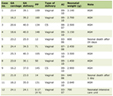
Of the 50 randomized participants (25 assigned to control, 25 to ELP), all had baseline and day-7 NIHSS, END, and SAE data available. Three participants (two in control group, one in ELP group) were lost to follow-up, leaving 47 (94%; 23 control, 24 ELP) with 30-day mortality and 90-day mRS data (Table 1). The mean (SD) age was 59.3 (15.1) years, and 32 participants (64.0%) were men. Hypertension (37 (74.0%)), dyslipidemia (26 (52.0%)), and diabetes mellitus (16 (32.0%)) were the most common comorbidities. The mean (SD) time from onset to randomization was 7.5 (5.5) h. All participants were functionally independent before stroke (pre-morbid mRS 0 in 45, 1 in 5). The responsible vessel was the M1 segment of the middle cerebral artery in 36 participants (72.0%), the internal carotid artery in 11 (22.0%), and the M2 segment in three (6.0%). Median baseline NIHSS was 11 (IQR, 8–14). Baseline characteristics were similar between groups. Mean baseline NIHSS was slightly higher in the ELP group (11.2 vs 10.4). The results are shown in Table 1.
 Click to view | Table 1. Baseline Characteristics and Clinical Outcomes by Randomized Group |
Day-7 NIHSS
The unadjusted mean (SD) day-7 NIHSS was 8.0 (4.3) with ELP and 8.9 (4.7) with control (difference, −0.92; 95% CI, −3.49 to 1.65; P = 0.47). After adjustment, the estimated marginal mean day-7 NIHSS was 7.45 (95% CI, 6.67–8.22) with ELP and 9.39 (95% CI, 8.62–10.17) with control, an adjusted difference of −1.95 points (95% CI, −3.04 to −0.85; P = 0.0008; partial ω2, 0.19) (Tables 2, 3). Each 1-point higher baseline score was associated with a 1.35-point higher day-7 score (95% CI, 1.17–1.53).
Click to view | Table 2. Primary ANCOVA Model for Day-7 NIHSS Score (N = 50) |
Click to view | Table 3. Neurologic, Functional, and Safety Outcomes by Randomized Group |
The assumptions of normality, linearity, and parallel slopes were met (Supplementary Material 1, jnr.elmerpub.com). Baseline NIHSS was strongly associated with day-7 NIHSS (r = 0.88) (Supplementary Material 2, jnr.elmerpub.com). Residuals were consistent with normality (Shapiro-Wilk P = 0.14), the slopes were parallel between groups (interaction P = .58), and no observation was highly influential (maximum Cook distance, 0.16). Residual variance was not constant (Breusch-Pagan P = 0.015), so we report robust inference. The HC3 95% CI was −3.10 to −0.80 (P = 0.001). Bootstrap resampling yielded a median difference of −1.92 (percentile 95% CI, −2.98 to −0.84; bias-corrected and accelerated CI, −2.99 to −0.87), and a randomization test gave P < 0.001. Estimates ranged from −1.68 to −2.08 across all baseline-adjusted and change-score sensitivity analyses, including exclusion of participants with an ELP interruption, of those who died by day 30, and of influential observations (Table 4).
Click to view | Table 4. Sensitivity and Robustness Analyses of the ELP Effect on Day-7 NIHSS Score |
Early neurologic change, deterioration, and safety
The median NIHSS reduction from baseline to day 7 was 2 points (IQR, 1–3) with control and 4 points (IQR, 3–4) with ELP (Fig. 1a–c). Early improvement (≥ 4-point reduction) occurred in four of 25 control participants (16.0%) and 18 of 25 ELP participants (72.0%) (risk difference, 56.0 percentage points; 95% CI, 29.0 to 72.7). This was an exploratory secondary outcome. No participant had END (0 of 25 in each group), and no SAEs were recorded during the 7-day treatment period. Because there were no events, the CI for the risk difference (−13.3 to 13.3 percentage points) mainly reflects the sample size and cannot exclude a clinically important difference in either direction. Three participants had non-SAEs: anxiety in one ELP participant, angina pectoris in one control participant, and anxiety with headache in another control participant.
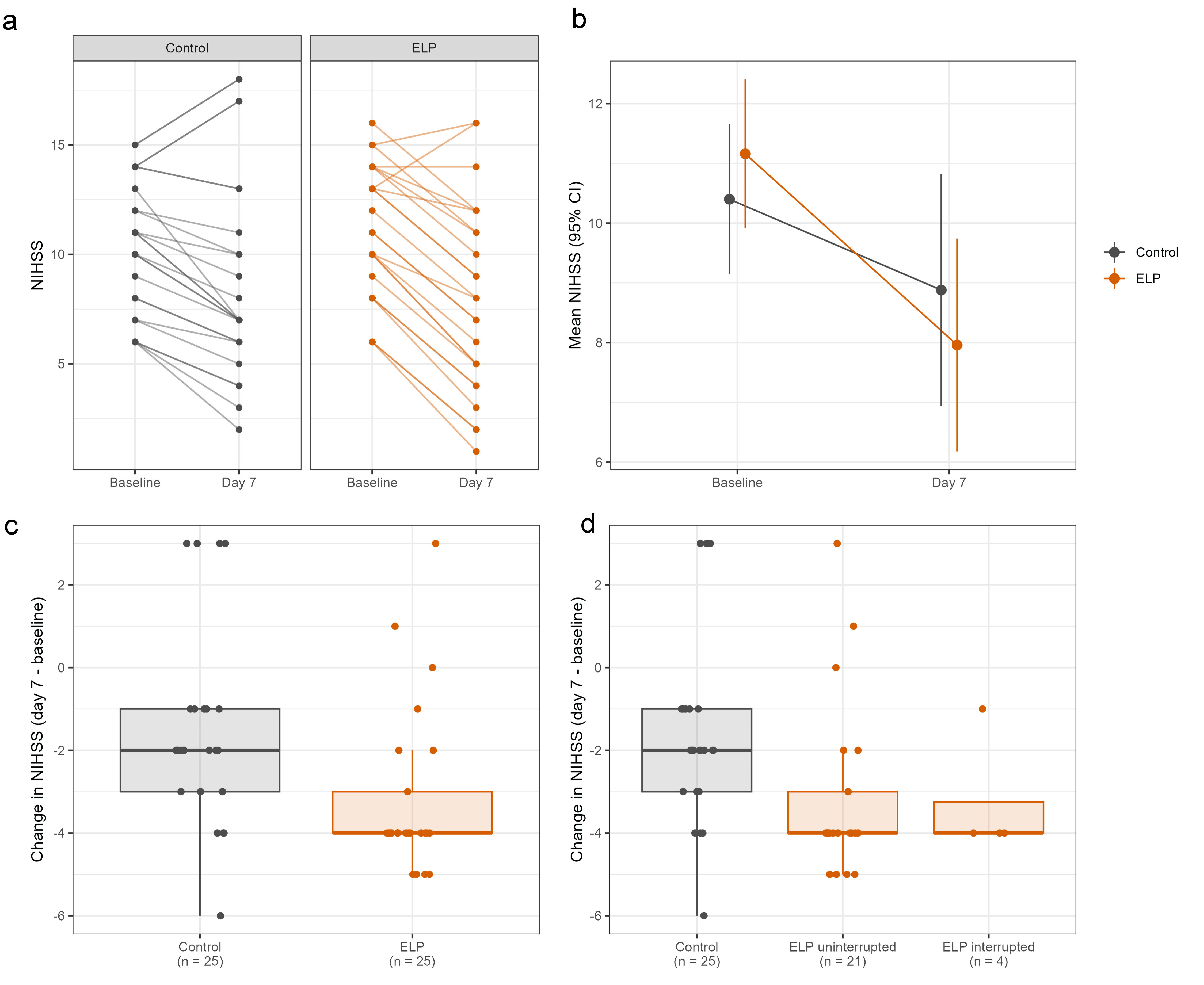 Click for large image | Figure 1. Neurologic trajectory and change in NIHSS score from baseline to day 7, according to treatment group. (a) Individual patient trajectories in NIHSS score from baseline to day 7 in the control group (25 patients) and the elevated leg positioning (ELP) group (25 patients). Each line represents one patient and connects the baseline and day-7 NIHSS scores. (b) The mean NIHSS score at baseline and day 7 in each treatment group; error bars indicate 95% CIs. (c) The change in NIHSS score from baseline to day 7 (day-7 score minus baseline score) in each treatment group. Boxes indicate the interquartile range, horizontal lines indicate the medians, and whiskers indicate the most extreme values within 1.5 times the interquartile range; individual observations are shown as points. (d) The change in NIHSS score from baseline to day 7 in the ELP group according to treatment adherence, with patients categorized as having received uninterrupted ELP (21 patients) or interrupted ELP (four patients). More negative values in (c) and (d) indicate greater reductions in NIHSS score and therefore greater improvement in neurologic status. CI: confidence interval; ELP: elevated leg positioning; NIHSS: National Institutes of Health Stroke Scale. |
Ninety-day outcomes
The full 90-day mRS distribution is shown here (Supplementary Material 3, 4, jnr.elmerpub.com). Among the 47 participants with follow-up data, mRS 0 to 2 was reached by 25 (53.2%): 11 of 23 (47.8%) control and 14 of 24 (58.3%) ELP participants (risk difference, 10.5 percentage points; 95% CI, −16.9 to 35.8; P = 0.56). Median 90-day mRS was 3 (IQR, 2–4.5) with control and 2 (IQR, 1–4) with ELP (P = 0.27). Assuming the three missing outcomes were favorable or unfavorable, the risk difference ranged from 4.0 to 16.0 percentage points, with all intervals including zero (Supplementary Material 5, jnr.elmerpub.com). Five participants died within 30 days (three in control group, two in ELP group; risk difference, −4.7 percentage points; 95% CI, −24.7 to 14.8) and seven within 90 days (four in control group, three in ELP group; risk difference, −4.9 percentage points; 95% CI, −26.3 to 16.3). All had a day-7 NIHSS recorded and were therefore alive at day 7 (Supplementary Material 6, jnr.elmerpub.com). These estimates are imprecise, and the study cannot distinguish a benefit of ELP from no difference in functional outcome or mortality.
Day-7 NIHSS score subgroup heterogeneity and adjusted treatment effect
Exploratory subgroup estimates showed no clear heterogeneity of effect (all interaction P ≥ 0.07) (Supplementary Material 7, jnr.elmerpub.com), but these analyses were underpowered. The adjusted difference was larger than the unadjusted difference for two reasons: the ELP group began with a slightly higher baseline score (by 0.76 points), and day-7 scores increased by more than 1 point per baseline point (Supplementary Material 8, jnr.elmerpub.com).
Adherence
Twenty-one of 25 ELP participants (84%) completed treatment without interruption, meeting the parent study’s 80% feasibility threshold. Four participants had an interruption (three for discomfort, one for anxiety). The mean change in NIHSS was similar in interrupted (n = 4) and uninterrupted (n = 21) participants (−3.25 vs. −3.19), although this comparison is descriptive and not randomized (Fig. 1d; Supplementary Material 9, jnr.elmerpub.com).
| Discussion | ▴Top |
In this secondary analysis of the LEG-UP feasibility study, randomized assignment to ELP was associated with a lower day-7 NIHSS score after adjustment for baseline stroke severity. The unadjusted difference in day-7 NIHSS was small and imprecise. The larger adjusted estimate reflects two features of the data: the ELP group had a marginally higher mean baseline NIHSS, and day-7 NIHSS increased by more than 1 point per baseline point. ANCOVA correctly removes this baseline imbalance, but the divergence between the adjusted and unadjusted estimates means the finding depends materially on model specification, and it should be reported and interpreted as such rather than presented as a single unqualified treatment effect.
The clinical interpretation of an approximately 2-point difference also warrants caution. A change of 2 or more points on the NIHSS has been used in prior trials as a convention for identifying potentially relevant change in serial neurologic status, but this threshold has not been independently validated as a minimal clinically important difference [34]. The more commonly applied threshold for early neurologic improvement is a reduction of 4 or more points, and recent work suggests that percentage change in NIHSS may predict functional outcome and recanalization more reliably than an absolute point change [35, 36]. The present findings therefore represent a statistical association of uncertain clinical magnitude rather than a validated measure of meaningful early recovery.
This analysis does not establish that a between-group difference in early NIHSS translates into patient-level functional benefit. Early neurologic change and longer-term functional outcome can dissociate, as illustrated by mobilization trials in which effects on early impairment did not track cleanly with 3-month disability [37, 38]. Modeling follow-up NIHSS by ANCOVA with baseline as a covariate, and reporting estimated marginal means, is statistically preferable to analysis of change from baseline, which rests on assumptions that are frequently unmet and loses power [39]. However, the surrogate validity of early NIHSS has been established primarily in acute reperfusion trials (thrombolysis and endovascular thrombectomy), where it is considered suitable as a primary outcome particularly for phase II studies; its extrapolation to a positioning intervention such as ELP, whose hypothesized mechanism is hemodynamic rather than reperfusion-based, is unproven [40]. Confirmation using a patient-centered functional endpoint such as the mRS is therefore required before this endpoint can be used to support efficacy claims.
The LEG-UP cohort was restricted by design to large artery atherosclerosis, and no participant had atrial fibrillation or other cardioembolic source. Cardioembolic stroke follows a distinct and often more severe early course, driven substantially by the risk of early recurrent embolism [41]. The physiological rationale for ELP, augmentation of cerebral perfusion via collateral flow in a steno-occlusive lesion, may not extend to an embolic mechanism with a fundamentally different risk profile. There is also a theoretical concern that positional change could influence embolic redistribution. The safety and efficacy of ELP in cardioembolic stroke is therefore an open question requiring dedicated study and cannot be inferred from the present findings.
Whether ELP is feasible, safe, and beneficial in the oldest-old population could not be determined in this analysis. This population has a distinct causal profile, a greater burden of medical complications, and mortality driven substantially by altered consciousness rather than baseline neurologic deficit; only four participants were 80 years of age or older, and patients with impaired consciousness were excluded by protocol [42]. This population represents a clinically important and mechanistically distinct direction for future investigation, ideally in a cohort that reflects the causal diversity and coexisting-illness burden characteristic of very elderly patients with acute ischemic stroke.
Several features of this analysis mitigate the effects of the small sample size. Residual diagnostics were reassuring, with no evidence of non-normality, non-linearity, or non-parallel slopes, but the variance of day-7 NIHSS was not constant across the sample, so model-based standard errors alone are not sufficient; a heteroscedasticity-robust interval and a permutation-based randomization test support the direction and approximate magnitude of the estimate under weaker assumptions. A resampling-based sensitivity analysis, performed both unstratified and stratified by allocation, produced estimates close to the model-based result. Because the bootstrap resamples the same 50 participants, this indicates only that the estimate is not an artifact of the specific residuals or an unstable fit; it does not substitute for replication in an independently sampled, adequately powered cohort [27].
Early neurologic trajectory as an intermediate outcome
The primary analysis modeled continuous day-7 NIHSS rather than a binary endpoint. Retaining the full range of NIHSS avoids the loss of information, and the substantial loss of power, associated with dichotomization [14, 15]. Adjusting for baseline via ANCOVA accounts for the dominant prognostic influence of initial severity and, in randomized trials, provides unbiased and more precise estimates than change-score analysis [19–21]. The association between baseline and day-7 NIHSS observed in this cohort supports baseline adjustment as a methodologically appropriate approach for a future trial, while also explaining why the adjusted and unadjusted estimates diverged in this analysis.
Magnitude of the observed effect
The observed adjusted difference would be notable for a simple, noninvasive, potentially scalable intervention if replicated. The CI is compatible with effects ranging from marginal to moderately large, and the unadjusted analysis, which showed no significant difference, is a reminder that this range should not be read as excluding a null or trivial effect in an adequately powered, more heterogeneous population. These findings should be interpreted with appropriate caution given the sample size and the post hoc nature of the analysis [27, 28].
Dissociation between early neurologic and 90-day functional findings
The day-7 NIHSS effect was accompanied by a modest, imprecise difference in 90-day functional independence and in mortality. Both intervals include the null, and sensitivity analyses accounting for the participants lost to follow-up did not materially change this conclusion. This dissociation is consistent with prior positioning trials in which hemodynamic or early neurologic signals did not translate into functional benefit [6, 8]. Potential explanations include limited power for a dichotomized 90-day endpoint in this small cohort, incomplete follow-up, individual-patient misclassification of early NIHSS relative to 90-day mRS (reported at roughly 25% in prior work) [13], and the contribution of post-acute factors: rehabilitation, lesion location, cognition, medical complications, and social support, to functional recovery [14]. The early neurologic signal should be regarded as hypothesis-generating and should not be interpreted as evidence of durable functional benefit or of a mortality effect in either direction.
Potential mechanisms
The observed association is biologically compatible with the hypothesis that leg elevation increases venous return and preload, thereby modifying cerebral perfusion pressure in tissue dependent on collateral circulation [3–5]. This study did not measure cerebral perfusion, cardiac output, or collateral status, so this mechanistic interpretation remains hypothetical. Because the eligibility criteria restricted enrollment to probable large-artery atherosclerosis with a single, well-defined culprit lesion and excluded cardioembolic and other stroke etiologies, any perfusion-mediated mechanism, if present, may be specific to this population and may not generalize to other stroke mechanisms. Larger positioning trials in broader populations have not translated hemodynamic effects into functional benefit [6, 8], underscoring that an early neurologic association in a small, etiologically restricted cohort cannot establish a perfusion-mediated mechanism. Future studies incorporating perfusion imaging, collateral assessment, transcranial Doppler, or continuous blood-pressure monitoring are needed to determine whether treatment-associated neurologic change is hemodynamically mediated [3, 4].
END and safety
No END event occurred in either group, and no SAEs were recorded during the 7-day treatment window. Because there were no events, the CI for the between-group difference is wide and cannot exclude a clinically important difference in END risk in either direction; the finding should be interpreted as reassuring but inconclusive rather than as evidence of safety. Reported END incidence in the broader stroke literature ranges from approximately 7% to 23% depending on definition and population [29–31]; the absence of events here likely reflects the small sample, the restrictive eligibility criteria (moderate NIHSS, single-vessel large-artery disease, exclusion of hemorrhage and cardioembolism), and close early monitoring. A future trial should retain a prospectively defined END outcome and enroll a sample large enough to estimate group differences with reasonable precision. Also, the cause of death was not adjudicated in the parent dataset, precluding classification of the observed deaths as neurological or non-neurological. The numerically lower 90-day mortality in the ELP group should therefore be interpreted with substantial caution; with this event count, we cannot distinguish a true mechanistic effect from chance, and future trials should prospectively incorporate independent, blinded cause-of-death adjudication as a secondary endpoint.
Feasibility and clinical translation
Most ELP participants completed treatment without interruption, meeting the parent study’s prespecified feasibility threshold; interruptions were attributable to discomfort and anxiety. Mean NIHSS change was similar in interrupted and uninterrupted participants, though this comparison is descriptive, based on a post-randomization subgroup, and not causally interpretable. ELP therefore appears implementable in an acute stroke unit with the described protocol, though patient tolerance remains a consideration, consistent with prior positioning trials in which deviation from habitual positioning reduced adherence [6]. A future efficacy trial should prospectively monitor treatment fidelity, cumulative exposure, and reasons for interruption.
Implications for future research
This analysis provides parameters to inform a future trial: an adjusted point estimate with a CI extending from a small to a moderate effect, a strong baseline–day-7 correlation supporting continued use of baseline-adjusted ANCOVA, and evidence that continuous NIHSS modeling is feasible in this population [12, 19]. Given the unadjusted-versus-adjusted discrepancy identified here, a future trial should prespecify the adjusted analysis, its covariates, and its handling of any baseline imbalance before unblinding. It should also specify: (1) baseline NIHSS as the primary adjustment covariate; (2) standardized timing of follow-up NIHSS assessment; (3) a prospectively defined END outcome with adequate power; (4) 90-day functional outcome as a co-primary or key secondary outcome; (5) systematic capture of treatment adherence and interruptions; (6) vascular and perfusion characteristics where feasible; and (7) a prespecified, clinically justified target effect size [29, 32]. Because this cohort was restricted to large-artery atherosclerosis, a future trial should determine whether effects, if any, extend to other stroke mechanisms, or should retain similar eligibility criteria and describe this as a limitation on generalizability.
Strengths and limitations
Strengths include randomized allocation as the primary exposure, limiting confounding; complete ascertainment of the primary outcome and of END and SAEs in all randomized participants; a well-defined, protocol-driven intervention with documented adherence; baseline adjustment using a method that is unbiased and efficient in randomized trials; robustness of the point estimate across multiple sensitivity approaches; and preservation of continuous NIHSS data. Limitations include the small sample size, which limits precision, generalizability, and the interpretability of subgroup analyses (all of which were exploratory and underpowered); a parent-trial design intended to assess feasibility rather than efficacy; a substantial divergence between the unadjusted and baseline-adjusted treatment effect that cannot be fully resolved at this sample size; heteroscedastic residuals requiring robust standard errors; an exploratory analysis of multiple secondary outcomes without multiplicity adjustment; incomplete 30-day mortality and 90-day mRS data; zero END and SAEs, which precludes any comparative safety estimate; the absence of mechanistic perfusion or hemodynamic measurement; open-label treatment delivery, with masking limited to outcome assessment; a restrictive, single-etiology, single-center eligibility profile that may limit generalizability; and post hoc registration of the trial record, so that this specific baseline-adjusted analysis was not prospectively specified. Given that larger positioning trials in broader populations have been neutral [6–8], these findings should be viewed as hypothesis-generating and supportive of further evaluation, not as evidence of efficacy.
Conclusions
In this exploratory study of acute moderate ischemic stroke, ELP was associated with a lower baseline-adjusted day-7 NIHSS score than control, though the unadjusted difference was small and 90-day estimates were consistent with no difference. No END occurred in either group, but the absence of events precludes conclusions about safety. These findings do not establish efficacy; hence, a larger, adequately powered, randomized trial with a patient-centered primary outcome, such as the 90-day mRS score, is warranted.
| Supplementary Material | ▴Top |
Suppl 1. Diagnostic plots for the primary analysis of covariance model of day-7 NIHSS score.
Suppl 2. Relationship between baseline and day-7 NIHSS score according to treatment group.
Suppl 3. Distribution of 90-day modified Rankin scale scores, including deaths.
Suppl 4. Distribution of modified Rankin scale scores at 90 days according to treatment group.
Suppl 5. Sensitivity of the 90-day functional independence estimate to missing outcomes.
Suppl 6. Participants who died within 90 days.
Suppl 7. Exploratory subgroup analyses of day-7 NIHSS score.
Suppl 8. Model diagnostics and decomposition of the adjusted treatment effect.
Suppl 9. Early neurologic change by treatment adherence (descriptive).
Acknowledgments
The authors thank Bonifacio II Pedregosa and the LEG-UP study investigators and study personnel for making the deidentified individual participant data publicly available and accessible for secondary research.
Financial Disclosure
This study received no grant from any funding agency.
Conflict of Interest
The authors declared no conflicts of interest relevant to the content of this manuscript.
Informed Consent
Not applicable to this secondary analysis of a publicly available deidentified dataset.
Author Contributions
KA conceptualized the study, developed the methodology, performed the investigation and formal data analysis, created the data visualizations, and wrote the original draft. BW and MW contributed to data review, methodological oversight, supervision, and manuscript editing. All authors attest to the integrity and accuracy of the data and analyses.
Data Availability
The deidentified individual participant data underlying this analysis are publicly available in the Harvard Dataverse: Pedregosa, Bonifacio II. De-identified Individual Participant Data for: Elevated Leg Positioning for Acute Moderate Ischemic Stroke: The LEG-UP Randomized Feasibility Study. Version 1.0. Harvard Dataverse, 2026. https://doi.org/10.7910/DVN/MMH4ZA.
| References | ▴Top |
- Raza SA, Rangaraju S. Prognostic scores for large vessel occlusion strokes. Neurology. 2021;97(20 Suppl 2):S79-S90.
doi pubmed - Saver JL, Altman H. Relationship between neurologic deficit severity and final functional outcome shifts and strengthens during first hours after onset. Stroke. 2012;43(6):1537-1541.
doi pubmed - Favilla CG, Mesquita RC, Mullen M, Durduran T, Lu X, Kim MN, Minkoff DL, et al. Optical bedside monitoring of cerebral blood flow in acute ischemic stroke patients during head-of-bed manipulation. Stroke. 2014;45(5):1269-1274.
doi pubmed - Carvalho LB, Kramer S, Borschmann K, Chambers B, Thijs V, Bernhardt J. Cerebral haemodynamics with head position changes post-ischaemic stroke: a systematic review and meta-analysis. J Cereb Blood Flow Metab. 2020;40(10):271678X20922457.
doi pubmed - Diamanti S, Mariani J, Versace A, Riva M, Cuccione E, Cai R, Monza L, et al. Head down tilt 15 degrees to preserve salvageable brain tissue in acute ischemic stroke: A pre-clinical pooled analysis, with focus on cerebral hemodynamics. Eur J Neurosci. 2023;57(12):2149-2159.
doi pubmed - Anderson CS, Arima H, Lavados P, Billot L, Hackett ML, Olavarria VV, Munoz Venturelli P, et al. Cluster-randomized, crossover trial of head positioning in acute stroke. N Engl J Med. 2017;376(25):2437-2447.
doi pubmed - Brunser AM, Ouyang M, Arima H, Lavados PM, Robinson T, Munoz-Venturelli P, Olavarria VV, et al. No benefit of flat head positioning in early moderate-severe acute ischaemic stroke: a HeadPoST study subgroup analysis. Stroke Vasc Neurol. 2020;5(4):406-409.
doi pubmed - Chen HS, Zhang NN, Cui Y, Li XQ, Zhou CS, Ma YT, Zhang H, et al. A randomized trial of Trendelenburg position for acute moderate ischemic stroke. Nat Commun. 2023;14(1):2592.
doi pubmed - Prabhakaran S, Gonzalez NR, Zachrison KS, Adeoye O, Alexandrov AW, Ansari SA, Chapman S, et al. 2026 guideline for the early management of patients with acute ischemic stroke: a guideline from the American Heart Association/American Stroke Association. Stroke. 2026;57(8):e316-e436.
doi pubmed - Wu Z, Zeng M, Li C, Qiu H, Feng H, Xu X, Zhang H, et al. Time-dependence of NIHSS in predicting functional outcome of patients with acute ischemic stroke treated with intravenous thrombolysis. Postgrad Med J. 2019;95(1122):181-186.
doi pubmed - Sajobi TT, Menon BK, Wang M, Lawal O, Shuaib A, Williams D, Poppe AY, et al. Early trajectory of stroke severity predicts long-term functional outcomes in ischemic stroke subjects: results from the ESCAPE trial (Endovascular treatment for small core and anterior circulation proximal occlusion with emphasis on minimizing CT to recanalization times). Stroke. 2017;48(1):105-110.
doi pubmed - Mistry EA, Yeatts S, de Havenon A, Mehta T, Arora N, De Los Rios La Rosa F, Starosciak AK, et al. Predicting 90-day outcome after thrombectomy: baseline-adjusted 24-hour NIHSS is more powerful than NIHSS score change. Stroke. 2021;52(8):2547-2553.
doi pubmed - Rinkel LA, Ospel JM, Kappelhof M, Sehgal A, McDonough RV, Tymianski M, Hill MD, et al. Comparing early national institutes of health stroke scale versus 90-day modified rankin scale outcomes in acute ischemic stroke trials: a systematic review and analysis. J Am Heart Assoc. 2025;14(9):e040304.
doi pubmed - Bell ML, Olivier J, King MT. Scientific rigour in psycho-oncology trials: why and how to avoid common statistical errors. Psychooncology. 2013;22(3):499-505.
doi pubmed - van Zwet EW, Harrell FE, Jr., Senn SJ. An empirical assessment of the cost of dichotomization of the outcome of clinical trials. Stat Med. 2026;45(3-5):e70402.
doi pubmed - Pedregosa Bonifacio II. De-identified individual participant data for: elevated leg positioning for acute moderate ischemic stroke: the LEG-UP randomized feasibility study. Harvard Dataverse. 2026.
doi - National Library of Medicine. March 19, 2026. Elevated leg positioning for acute moderate ischemic stroke: The LEG-UP randomized feasibility study (Identifier No. NCT07483580). ClinicalTrials.gov. Retrieved September 30, 2026, from https://clinicaltrials.gov/study/NCT07483580.
- Holmberg MJ, Andersen LW. Adjustment for baseline characteristics in randomized clinical trials. JAMA. 2022;328(21):2155-2156.
doi pubmed - Egbewale BE, Lewis M, Sim J. Bias, precision and statistical power of analysis of covariance in the analysis of randomized trials with baseline imbalance: a simulation study. BMC Med Res Methodol. 2014;14:49.
doi pubmed - Van Breukelen GJ. ANCOVA versus change from baseline: more power in randomized studies, more bias in nonrandomized studies [corrected]. J Clin Epidemiol. 2006;59(9):920-925.
doi pubmed - Senn S. Change from baseline and analysis of covariance revisited. Stat Med. 2006;25(24):4334-4344.
doi pubmed - Landau S, Emsley R, Dunn G. Beyond total treatment effects in randomised controlled trials: Baseline measurement of intermediate outcomes needed to reduce confounding in mediation investigations. Clin Trials. 2018;15(3):247-256.
doi pubmed - Wang B, Ogburn EL, Rosenblum M. Analysis of covariance in randomized trials: More precision and valid confidence intervals, without model assumptions. Biometrics. 2019;75(4):1391-1400.
doi pubmed - Wouters A, Nysten C, Thijs V, Lemmens R. Prediction of outcome in patients with acute ischemic stroke based on initial severity and improvement in the first 24 h. Front Neurol. 2018;9:308.
doi pubmed - DeGraba TJ, Hallenbeck JM, Pettigrew KD, Dutka AJ, Kelly BJ. Progression in acute stroke: value of the initial NIH stroke scale score on patient stratification in future trials. Stroke. 1999;30(6):1208-1212.
doi pubmed - Pannuti CM, da Silva HDP, Su N, Li KY, Heitz-Mayfield LJA. Statistical gems and cautions from the statistical advisory board of clinical oral implants research. Clin Oral Implants Res. 2025;36(12):1525-1534.
doi pubmed - Dwivedi AK, Mallawaarachchi I, Alvarado LA. Analysis of small sample size studies using nonparametric bootstrap test with pooled resampling method. Stat Med. 2017;36(14):2187-2205.
doi pubmed - Henderson AR. The bootstrap: a technique for data-driven statistics. Using computer-intensive analyses to explore experimental data. Clin Chim Acta. 2005;359(1-2):1-26.
doi pubmed - Seners P, Turc G, Oppenheim C, Baron JC. Incidence, causes and predictors of neurological deterioration occurring within 24 h following acute ischaemic stroke: a systematic review with pathophysiological implications. J Neurol Neurosurg Psychiatry. 2015;86(1):87-94.
doi pubmed - Xie X, Xiao J, Wang Y, Pan L, Ma J, Deng L, Yang J, et al. Predictive model of early neurological deterioration in patients with acute ischemic stroke: a retrospective cohort study. J Stroke Cerebrovasc Dis. 2021;30(3):105459.
doi pubmed - Peng M, Zhang Y. Risk factors for early neurological deterioration in patients with acute ischaemic stroke and assessment of short-term prognosis. Front Neurol. 2026;17:1845703.
doi pubmed - Han Q, You S, Zheng D, Wang Y, Li Q, Wang X, Maeda T, et al. Optimal definition of early neurological deterioration in thrombolysis-treated acute ischemic stroke: ENCHANTED study. Cerebrovasc Dis. 2026:1-10.
doi pubmed - R Core Team. R: A language and environment for statistical computing. Version 4.5.3. Vienna, Austria: R Foundation for Statistical Computing; 2026. Available from: https://www.R-project.org/.
- Kasner SE. Clinical interpretation and use of stroke scales. Lancet Neurol. 2006;5(7):603-612.
doi pubmed - Agarwal S, Scher E, Lord A, Frontera J, Ishida K, Torres J, Rostanski S, et al. Redefined measure of early neurological improvement shows treatment benefit of alteplase over placebo. Stroke. 2020;51(4):1226-1230.
doi pubmed - Kharitonova T, Mikulik R, Roine RO, Soinne L, Ahmed N, Wahlgren N, Safe Implementation of Thrombolysis in Stroke I. Association of early National Institutes of Health Stroke Scale improvement with vessel recanalization and functional outcome after intravenous thrombolysis in ischemic stroke. Stroke. 2011;42(6):1638-1643.
doi pubmed - AVERT Trial Collaboration group. Efficacy and safety of very early mobilisation within 24 h of stroke onset (AVERT): a randomised controlled trial. Lancet. 2015;386(9988):46-55.
doi pubmed - Li X, Kong Y. Safety and efficacy of very early mobilization in acute stroke: a systematic review and meta-analysis. Arch Phys Med Rehabil. 2026;107(2):333-352.
doi pubmed - Mistry EA, Yeatts SD, Khatri P, Mistry AM, Detry M, Viele K, Harrell FE, Jr., et al. National institutes of health stroke scale as an outcome in stroke research: value of ANCOVA over analyzing change from baseline. Stroke. 2022;53(4):e150-e155.
doi pubmed - Chalos V, van der Ende NAM, Lingsma HF, Mulder M, Venema E, Dijkland SA, Berkhemer OA, et al. National institutes of health stroke scale: an alternative primary outcome measure for trials of acute treatment for ischemic stroke. Stroke. 2020;51(1):282-290.
doi pubmed - Arboix A, Garcia-Eroles L, Massons J, Oliveres M. Predictive clinical factors of in-hospital mortality in 231 consecutive patients with cardioembolic cerebral infarction. Cerebrovasc Dis. 1998;8(1):8-13.
doi pubmed - Torres-Riera S, Arboix A, Parra O, Garcia-Eroles L, Sanchez-Lopez MJ. Predictive clinical factors of in-hospital mortality in women aged 85 years or more with acute ischemic stroke. Cerebrovasc Dis. 2025;54(1):11-19.
doi pubmed
This article is distributed under the terms of the Creative Commons Attribution 4.0 International License (CC BY 4.0), which permits unrestricted use, distribution, and reproduction in any medium, including commercial use, provided the original work is properly cited.
Journal of Neurology Research is published by Elmer Press Inc.