

Adult-Onset Reversible Splenial Lesion Syndrome: A Case Series and Review of Age-Related Differences

Authors

DOI:

https://doi.org/10.14740/jnr1085

Keywords:

Splenium of the corpus callosum, Reversible splenial lesion syndrome, Magnetic resonance imaging

Abstract

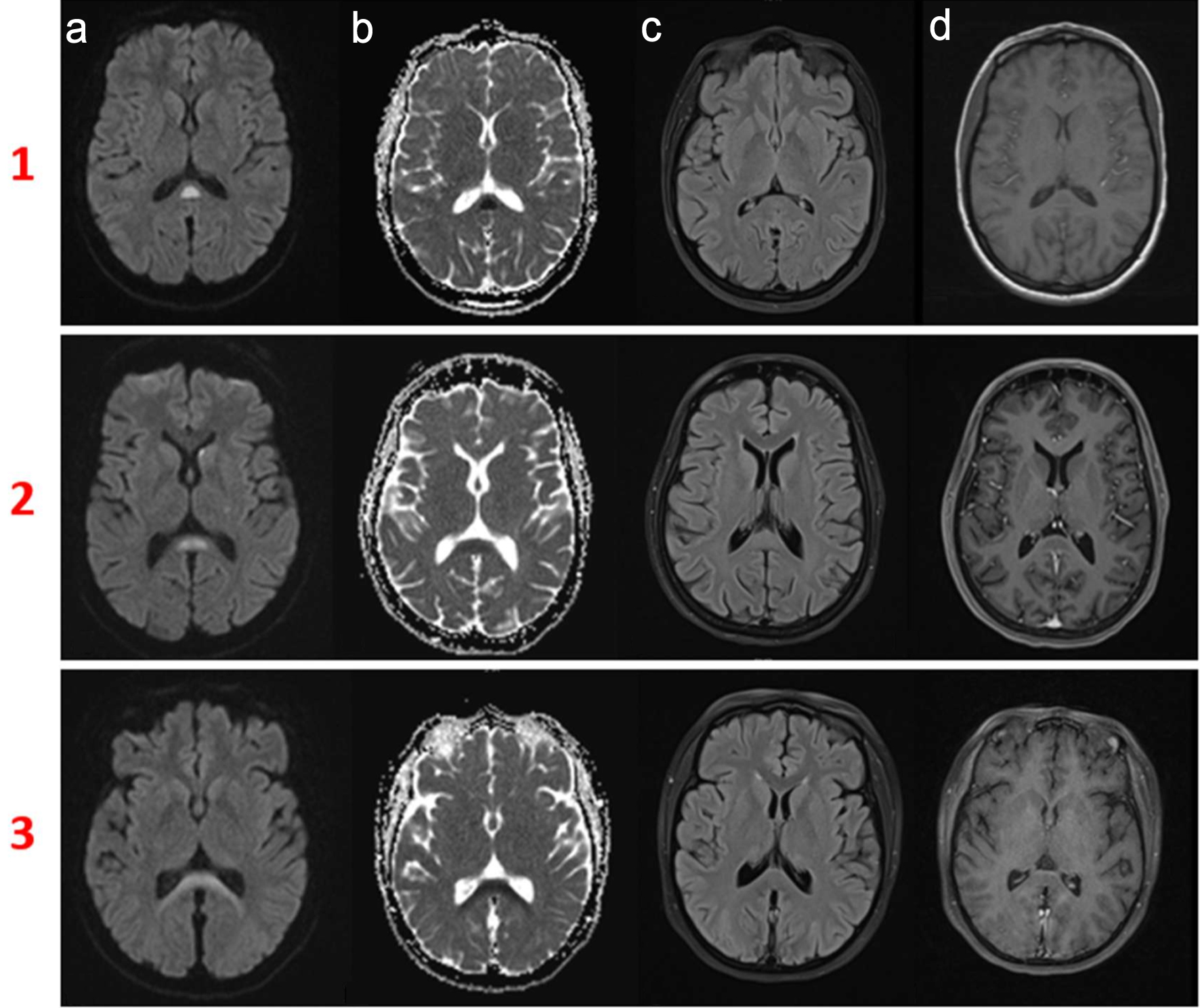
Reversible splenial lesion syndrome (RESLES) is a neuroradiological entity described by a reversible lesion in the splenium of the corpus callosum (SCC) of unknown etiology. RESLES is often associated with infectious and metabolic diseases, seizure, and antiepileptic drugs withdrawal. Although clinical presentations are nonspecific, the syndrome is typically identified by its radiological aspects through magnetic resonance imaging (MRI). In this report, we present five cases of adult-onset RESLES (two males and three females) that were admitted in our department at a university hospital in the years between 2021 and 2025, with each case occurring in different clinical settings. We analyze their presentation, clinical course, and outcomes, and compare them with pediatric-onset cases to highlight potential age-related differences. Patients’ ages varied from 29 to 46 years old. Neurological symptoms included: headache 3/5, drowsiness 2/5, slurred speech 2/5, hearing loss 1/5, blurred vision 1/5, dysarthria 1/5, limb ataxia 1/5, postural tremors 1/5, insomnia 1/5, and agitation 1/5. One patient presented with a unique seizure then remained asymptomatic. The clinical settings associated with RESLES included the postpartum, infection, multiple organ failure, extensive cerebral venous thrombosis, and Burkitt lymphoma. Clinical outcomes at follow-up were favorable across all cases. In contrast to pediatric-onset RESLES, where symptoms and precipitating factors appear relatively homogeneous across studies with seizures as the predominant manifestation and infection as the leading cause, adult-onset cases demonstrate greater clinical and etiological heterogeneity. Analysis of our sample suggests that adult-onset RESLES shares the core radiological characteristics of the pediatric form but differs markedly in its common precipitating factors and clinical presentations.
Author Biographies

  • Khaoula Belaidi, Neurology Department, Mohammed VI University Hospital, Marrakech, Morocco

    Neurology resident at the Neurology department in Mohammed VI University Hospital of Marrakesh & Marrakech Medical School, Cadi Ayyad University, Marrakesh, Morocco.

  • Safae Zahlane, Neurology Department, Mohammed VI University Hospital, Marrakech, Morocco

    Assistant Professor of Neurology at the Neurology department in Mohammed VI University Hospital of Marrakesh & Marrakech Medical School, Cadi Ayyad University, Marrakesh, Morocco.

  • M’Hamed Riad Amanallah, Neurology Department, Mohammed VI University Hospital, Marrakech, Morocc

    Neurology resident at the Neurology department in Mohammed VI University Hospital of Marrakesh & Marrakech Medical School, Cadi Ayyad University, Marrakesh, Morocco.

  • Oumayna Azzou, Neurology Department, Mohammed VI University Hospital, Marrakech, Morocco

    Neurology resident at the Neurology department in Mohammed VI University Hospital of Marrakesh & Marrakech Medical School, Cadi Ayyad University, Marrakesh, Morocco.

  • Hamza Benzakour, Neurology Department, Mohammed VI University Hospital, Marrakech, Morocco

    Neurology resident at the Neurology department in Mohammed VI University Hospital of Marrakesh & Marrakech Medical School, Cadi Ayyad University, Marrakesh, Morocco.

  • Yasmina Zakaria, Neurology Department, Mohammed VI University Hospital, Marrakech, Morocco

    Associate Professor of Neurology at the Neurology department in Mohammed VI University Hospital of Marrakesh & Marrakech Medical School, Cadi Ayyad University, Marrakesh, Morocco.

  • Mohamed Chraa, Neurology Department, Mohammed VI University Hospital, Marrakech, Morocco

    Neurologist & Professor of Neurophysiology at the Neurology department in Mohammed VI University Hospital of Marrakesh & Marrakech Medical School, Cadi Ayyad University, Marrakesh, Morocco.

  • Nissrin Louhab, Neurology Department, Mohammed VI University Hospital, Marrakech, Morocco

    Head of the Neurology department in Mohammed VI University Hospital of Marrakesh, Morocco.

    Professor of Neurology at Marrakech Medical School, Cadi Ayyad University, Marrakesh, Morocco.

Downloads

Published

2026-05-04

Issue

Section

Case Report

How to Cite

1.
Belaidi K, Zahlane S, Amanallah MR, et al. Adult-Onset Reversible Splenial Lesion Syndrome: A Case Series and Review of Age-Related Differences. J Neurol Res. 2026;16(2):122-126. doi:10.14740/jnr1085