

The Therapeutic Potential of Ketamine as a Treatment for Amyotrophic Lateral Sclerosis: A Narrative Review Focusing on Sigma-1 Receptor Modulation, Mitochondrial Function, and Neuroplasticity
DOI:
https://doi.org/10.14740/jnr1115Keywords:
Neuroplasticity, Amyotrophic lateral sclerosis, TreatmentAbstract
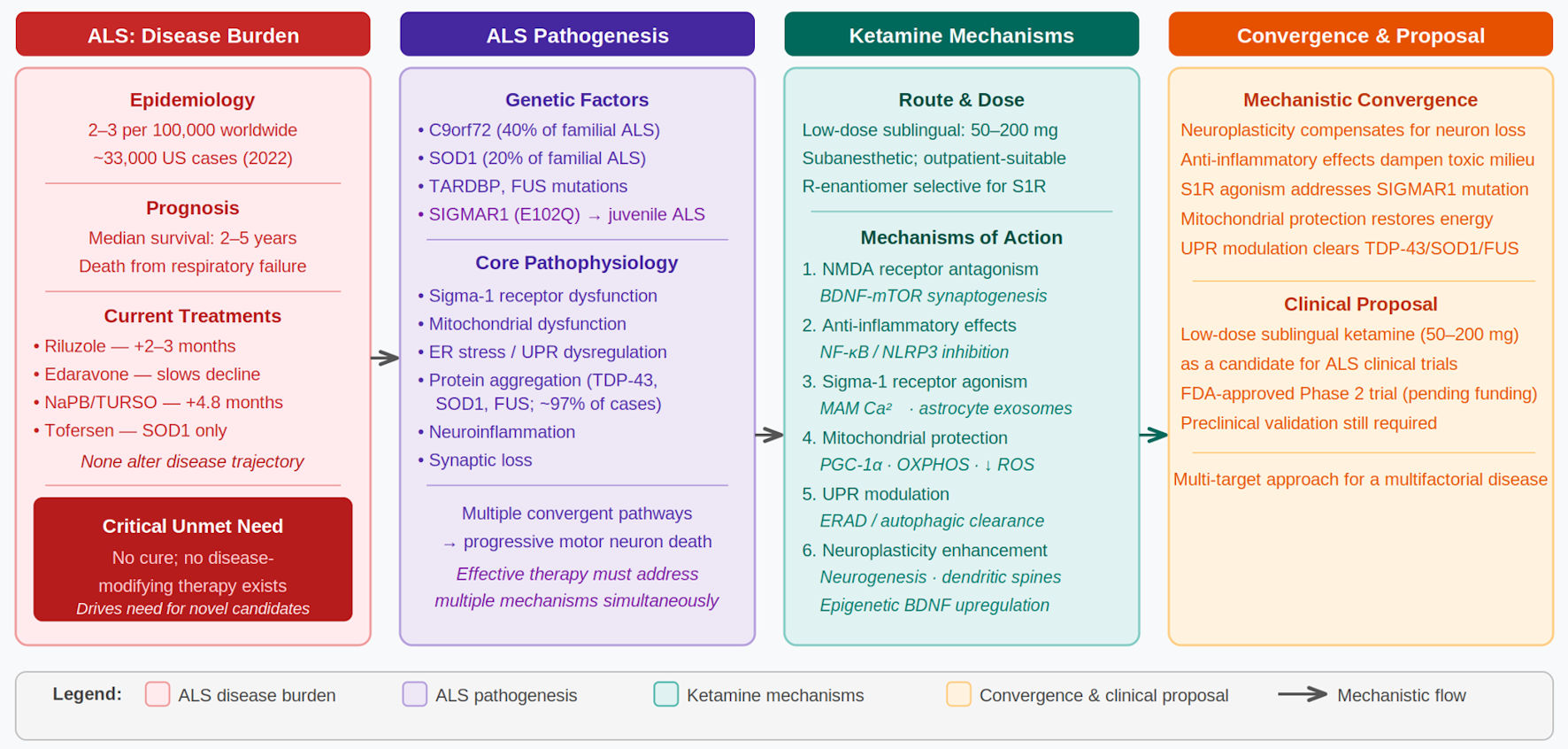
Amyotrophic lateral sclerosis (ALS) is a devastating neurodegenerative disease characterized by progressive motor neuron degeneration. Current Food and Drug Administration (FDA)-approved treatments provide only modest benefits and do not substantially alter disease trajectory, underscoring a critical unmet need for novel therapeutic strategies. Recent advances in understanding ALS pathophysiology have revealed important roles for mitochondrial dysfunction, endoplasmic reticulum stress, protein aggregation, and sigma-1 receptor dysregulation in disease progression. Ketamine, a well-established anesthetic with emerging applications as a rapid-acting antidepressant, has been reported to act through multiple mechanisms that may address key pathological features of ALS. Beyond its well-characterized N-methyl-D-aspartate (NMDA) receptor antagonism, ketamine may act as a sigma-1 receptor agonist and has been reported to promote neuroplasticity via brain-derived neurotrophic factor (BDNF)-mechanistic target of rapamycin (mTOR) signaling, exert anti-inflammatory effects, modulate mitochondrial function, enhance protein clearance, and facilitate sigma-1 receptor trafficking from astrocytes to neurons. This review examines the mechanistic rationale for ketamine as a potential therapeutic agent in ALS, focusing on sigma-1 receptor signaling, mitochondrial bioenergetics, protein aggregate clearance, and neuroplasticity. We discuss the convergence of ALS pathophysiology and ketamine’s pharmacological mechanisms, proposing low-dose sublingual ketamine as a candidate for clinical investigation, and note that similar pathophysiological mechanisms in other neurodegenerative diseases may warrant parallel investigation.
Published
Issue
Section
License
Copyright (c) 2026 The authors

This work is licensed under a Creative Commons Attribution 4.0 International License.