

The Orexin System in Pediatric Learning Difficulties: Neurobiological Foundations for Educational, Psychoeducational and Behavioral Therapies
DOI:
https://doi.org/10.14740/jnr1104Keywords:
Orexin, Learning difficulties, Neurodevelopment disorders, Educational therapy, Behavioral therapy, Early interventionAbstract
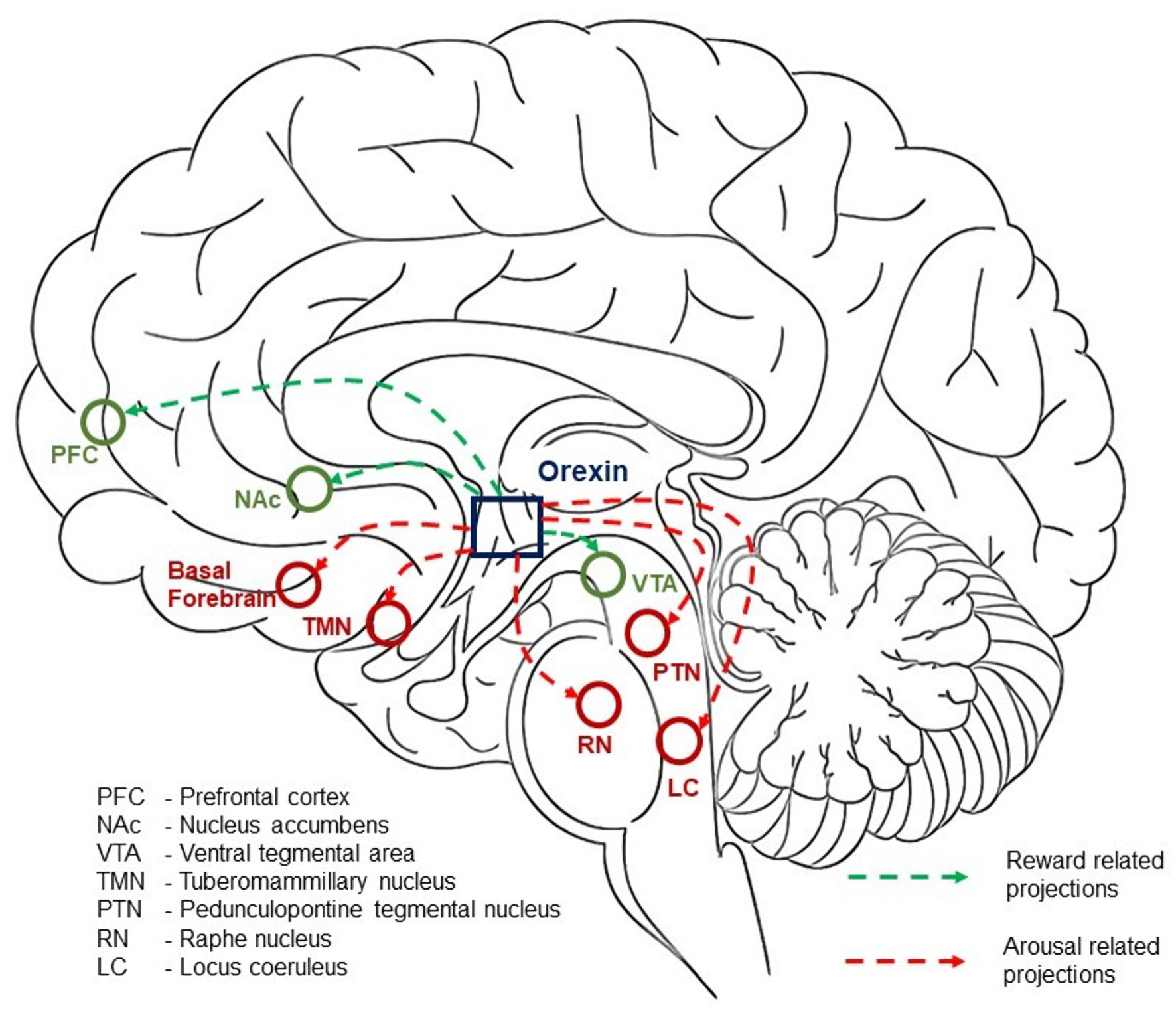
The orexin (also known as hypocretin) system, located in the lateral hypothalamus, plays a crucial role in regulating arousal, attention, motivation, and memory consolidation through its extensive neural projections across the brain. This article examines the neurobiological foundations linking orexin dysfunction to pediatric learning difficulties and explores how educational, psychoeducational and behavioral therapies may leverage orexin-mediated pathways to improve learning outcomes. The orexin system’s integrative functions in coordinating sleep-wake cycles, reward processing, arousal and cognitive performance provide a theoretical framework for understanding specific learning difficulties, attention deficits, and developmental conditions. Educational therapy approaches that optimize circadian timing, enhance intrinsic motivation, and support memory consolidation may work, in part, through supporting orexin system function. Similarly, educational therapy addressing arousal regulation, executive function, alongside behavioral therapy targeting adaptive behavioral responses and habit formation, may benefit from orexin-informed strategies. However, significant limitations remain in current research, including the lack of direct evidence linking orexin modulation to therapeutic outcomes. Future directions should prioritize translational and controlled intervention studies to establish evidence-based practices that bridge neuroscience discoveries with educational applications for children with learning difficulties.
Published
Issue
Section
License
Copyright (c) 2026 The authors

This work is licensed under a Creative Commons Attribution 4.0 International License.