


Comparison of Diffusion Tensor Imaging Parameters Associated With Motor Fiber Injury Between Patients With Chronic Subdural Hematoma and Intracerebral Hemorrhage
DOI:
https://doi.org/10.14740/jnr1086Keywords:
Apparent diffusion coefficient, Chronic subdural hematoma, Diffusion tensor imaging, Fractional anisotropy, Intracerebral hemorrhage, PrognosisAbstract
Background: Most patients with chronic subdural hematoma (CSDH) show remarkable recovery from paralysis after surgery, while patients with intracerebral hemorrhage (ICH) often suffer from residual motor deficits. The mechanisms underlying this discrepancy remain unclear.
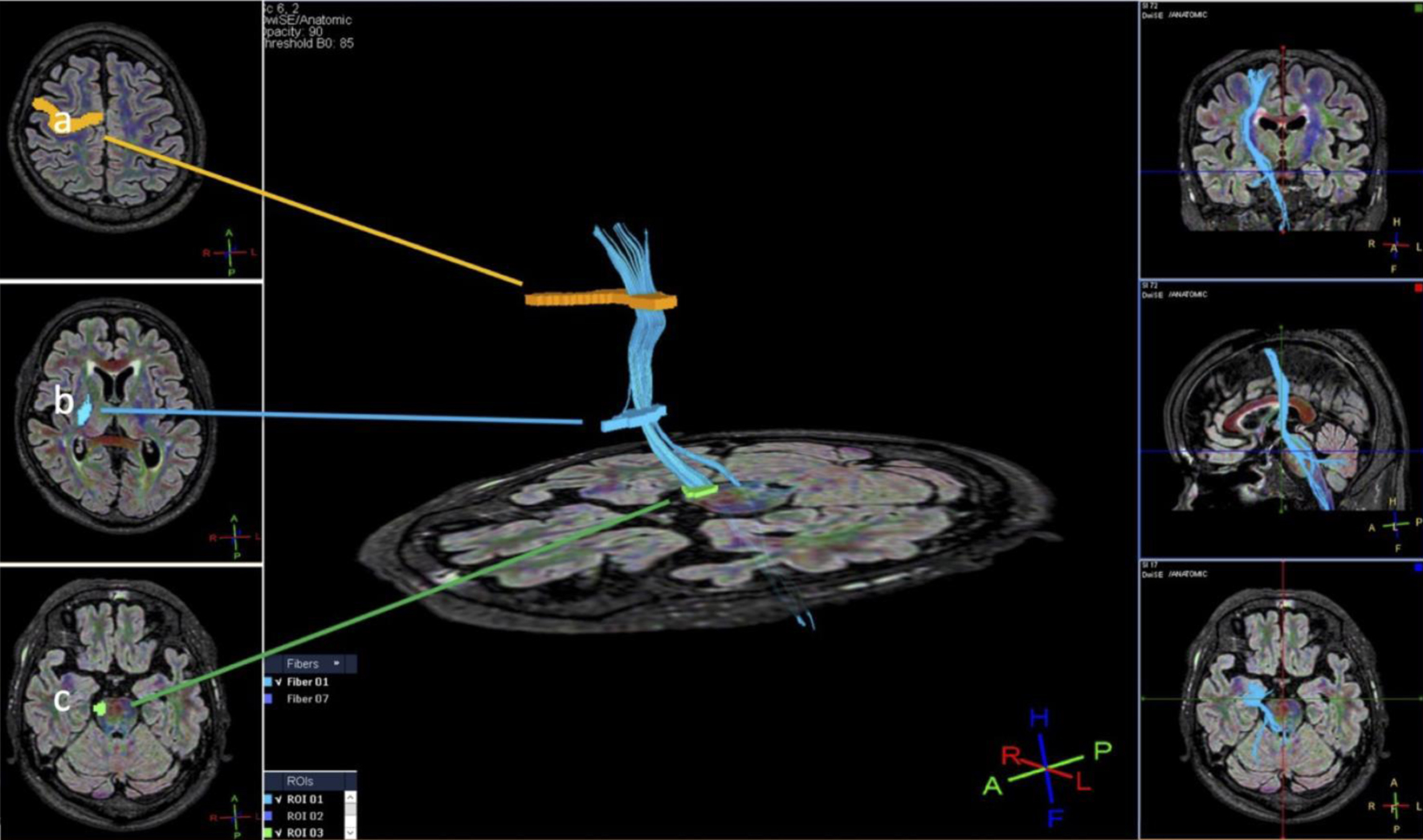
Methods: We hypothesized that differences in corticospinal tract integrity could explain the divergent outcomes and therefore investigated quantitative diffusion tensor imaging (DTI) parameters in both groups. Fractional anisotropy (FA) and apparent diffusion coefficient (ADC) values were measured along the pyramidal tract, and results were correlated with clinical outcomes assessed by the modified Rankin scale (mRS).
Results: Patients with ICH demonstrated significantly lower FA values, indicating substantial pyramidal tract disruption, whereas those with CSDH showed no significant FA reduction. The CSDH group exhibited significant functional improvement between onset and discharge, with 70% achieving favorable outcomes (mRS 0–2) compared with only 18% in the ICH group. A negative correlation was observed between FA values and mRS across all patients, suggesting that structural integrity of the corticospinal tract strongly influences prognosis.
Conclusion: These results imply that, unlike ICH, CSDH does not generally cause irreversible tract damage, which may contribute to the rapid improvement of postoperative paralysis. Our findings highlight the value of DTI parameters for assessing motor fiber injury and prognosis in hemorrhagic brain diseases. Furthermore, this study emphasizes that surgical decompression for CSDH may allow functional recovery by preserving white matter integrity, whereas ICH is associated with more severe and permanent tract injury. DTI-based evaluation may therefore provide an imaging biomarker for differentiating recovery potential.
Published
Issue
Section
License
Copyright (c) 2026 The authors

This work is licensed under a Creative Commons Attribution 4.0 International License.