

Longitudinal Changes in Pituitary Area in Individuals Undergoing Magnetic Resonance Imaging Checkups
DOI:
https://doi.org/10.14740/jnr1108Keywords:
Pituitary, Gland, Longitudinal, Smoke, AlcoholAbstract
Background: The aim of the study was to investigate longitudinal changes in pituitary area and their associations with baseline characteristics and lifestyle factors in individuals undergoing brain magnetic resonance imaging (MRI) checkups.
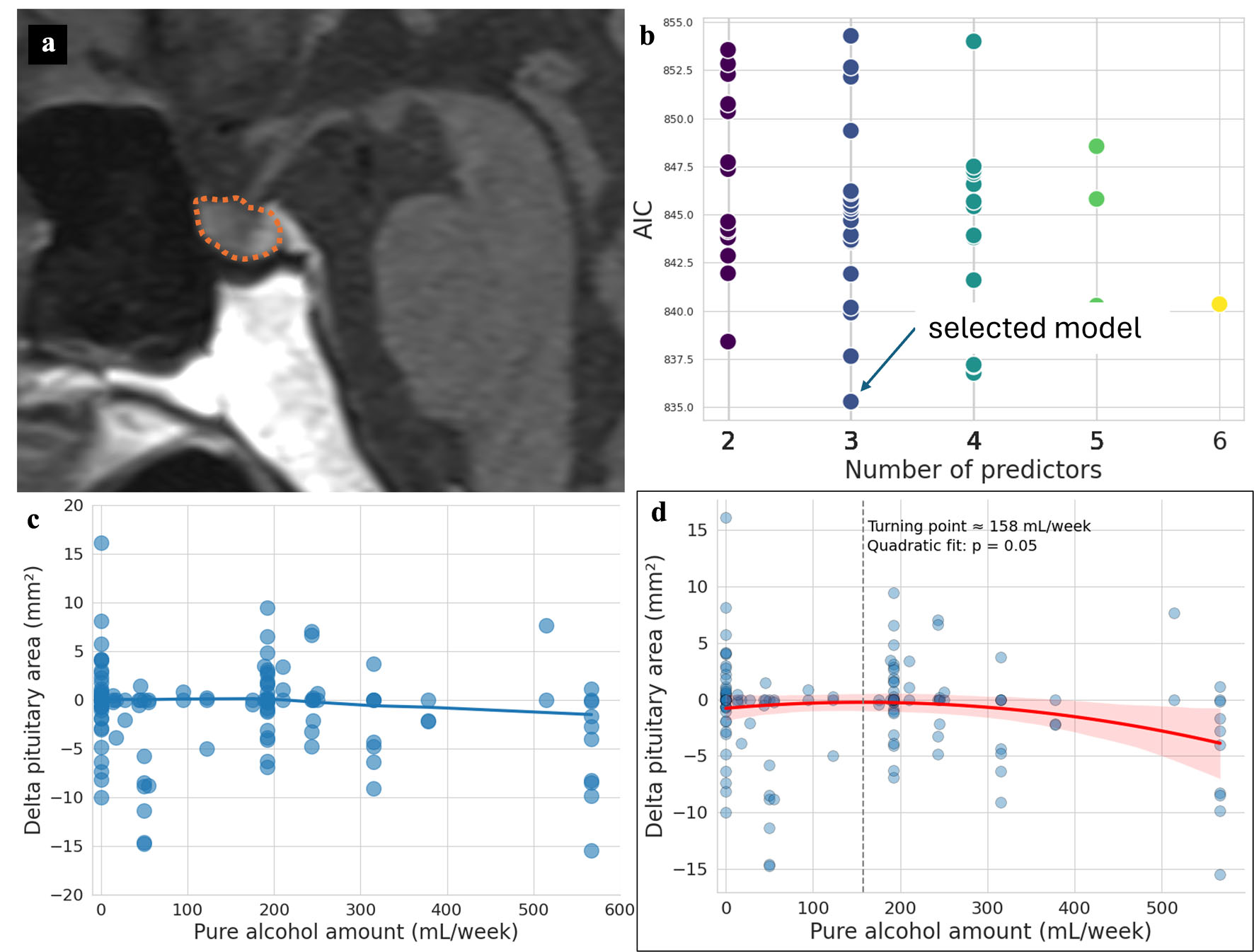
Methods: A retrospective analysis was performed on 151 MRI from 52 individuals who underwent at least two checkups. Pituitary area was manually delineated on mid-sagittal T1-weighted MRI. Longitudinal changes were evaluated using linear mixed-effects models with random intercepts for individuals and fixed effects including time from baseline, sex, smoking status, and alcohol intake.
Results: The median age at baseline MRI was 61 years (interquartile range (IQR), 50–65), with 46 males (88%). The median interval between consecutive MRIs was 1.05 years (IQR, 0.98–1.90), and the median interval from first to last MRI was 2.16 years (IQR, 1.15–4.88). Never-smokers constituted 38%, and regular alcohol drinkers 69%. In the primary mixed-effects model, male sex (β = 3.28, P < 0.01), regular alcohol intake (β = −1.84, P = 0.02), and longer interval from baseline (β = −0.44, P < 0.01) were associated with pituitary area change, whereas smoking status and baseline age were not significant. In a sensitivity analysis adjusting for baseline pituitary area, the association with longer interval from baseline remained significant, whereas the alcohol-related association was attenuated and no longer statistically significant. An exploratory quadratic analysis suggested a modest nonlinear relationship between weekly pure alcohol intake and pituitary area change.
Conclusion: Progressive reduction in pituitary area within the same individuals over time was observed. Exploratory alcohol-related differences warrant further investigation.
Published
Issue
Section
License
Copyright (c) 2026 The authors

This work is licensed under a Creative Commons Attribution 4.0 International License.