

Atypical Posterior Reversible Encephalopathy Syndrome in Acute Porphyria
DOI:
https://doi.org/10.14740/jnr1125Keywords:
Brain MRI, Porphyria, PRES, Edema, Seizures, Abdominal painAbstract
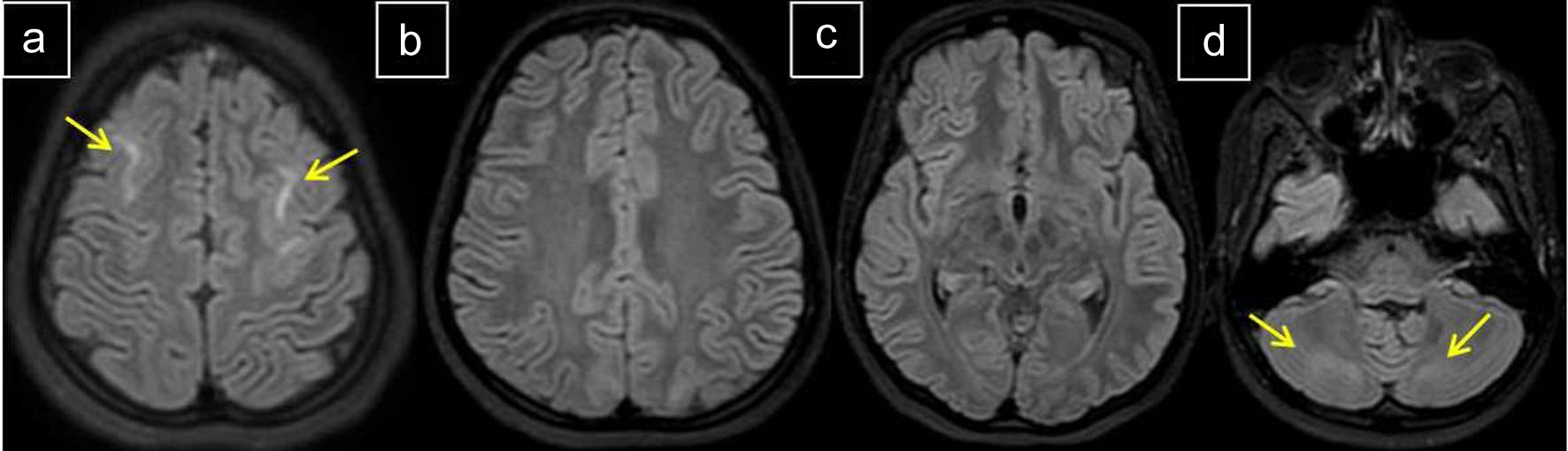
Porphyrias are a group of rare metabolic disorders resulting from defects in the heme biosynthesis pathway, with neurological involvement reported in approximately 5–17% of acute cases. We report the case of a 17-year-old female with no known comorbidities who presented with generalized tonic–clonic seizures progressing to status epilepticus, with severe hypertension noted at admission (blood pressure 200/106 mm Hg). She had a preceding 4-month history of neuropsychiatric symptoms, including mood disturbances, along with intermittent abdominal pain and constipation, suggestive of underlying neurovisceral involvement. Magnetic resonance imaging (MRI) of the brain revealed patchy areas of vasogenic edema involving the bilateral frontal, parietal, occipital, and cerebellar regions, with associated leptomeningeal enhancement. These imaging findings raised multiple differential diagnoses such as atypical posterior reversible encephalopathy syndrome (PRES) and inflammatory etiologies (myelin oligodendrocyte glycoprotein–associated disease). Cerebrospinal fluid analysis for demyelinating markers and autoimmune workup was unremarkable. Acute porphyria was suspected based on clinical and imaging findings and subsequently confirmed by positive urinary porphobilinogen and qualitative porphyrin testing. The patient was managed conservatively with hyperhydration using 5% dextrose along with supportive care, leading to significant clinical improvement. Follow-up imaging done on day 5 of admission demonstrated near-complete resolution of the previously noted vasogenic edema, consistent with the potential reversible nature of the PRES. This case highlights an atypical presentation of acute porphyria manifesting as PRES with cerebellar involvement and leptomeningeal enhancement, an uncommon imaging pattern that may lead to diagnostic uncertainty. It underscores the importance of considering porphyria in the differential diagnosis of PRES, particularly in young patients with probable clinical symptoms, as early recognition and timely management can result in complete clinical recovery.
Published
Issue
Section
License
Copyright (c) 2026 The authors

This work is licensed under a Creative Commons Attribution-NonCommercial 4.0 International License.