


Multimodal Neurological Assessment and Targeted Rehabilitation Following Motor Vehicle Collision-Induced Mild Traumatic Brain Injury: A Case Report
DOI:
https://doi.org/10.14740/jnr1127Keywords:
Mild traumatic brain injury, Concussion, Motor vehicle collision, Multimodal assessment, Diffusion tensor imaging, Oculomotor dysfunction, Vestibular dysfunction, NeurorehabilitationAbstract
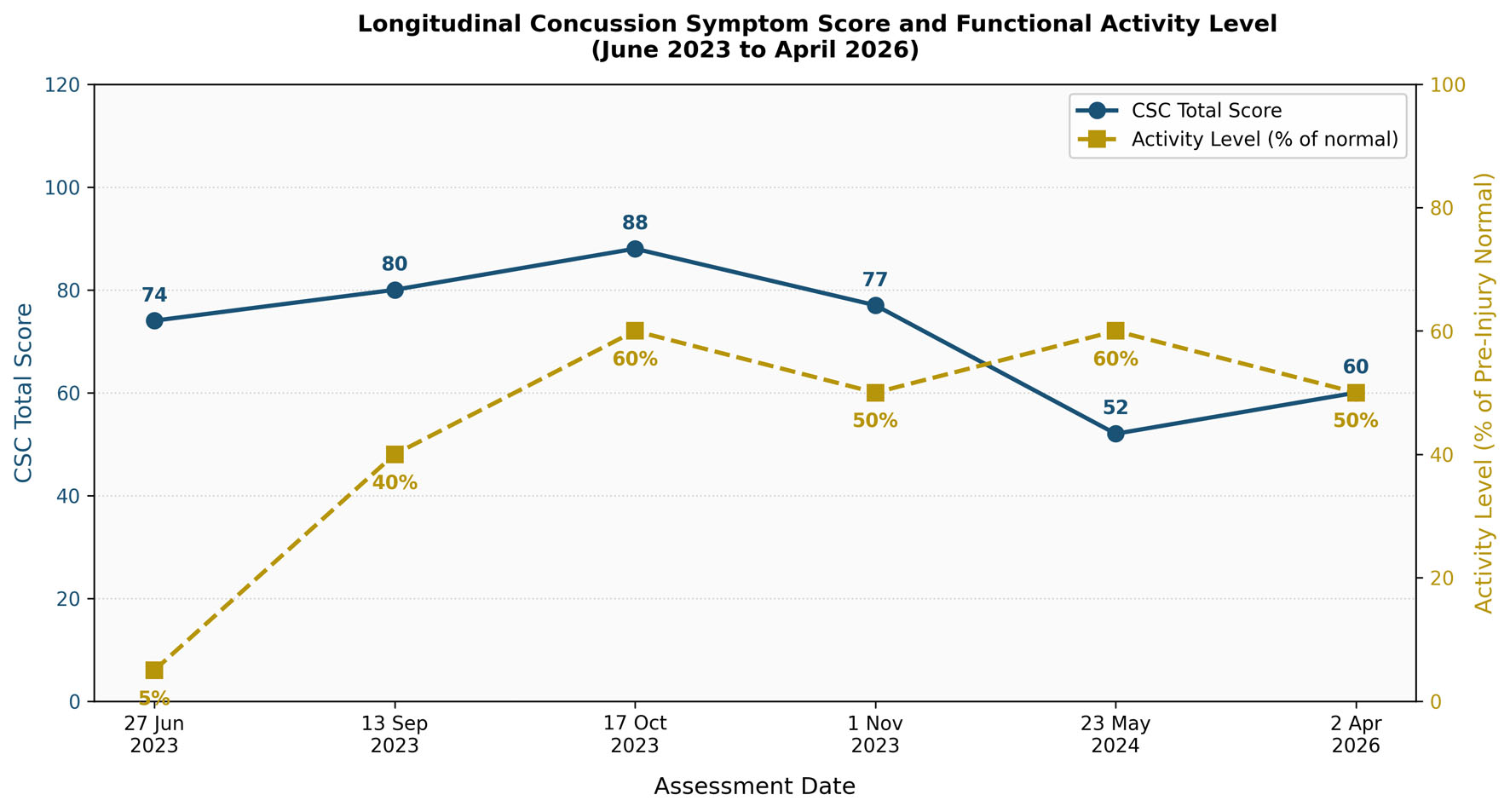
Mild traumatic brain injury (mTBI) following motor vehicle collision (MVC) frequently produces heterogeneous cluster of neurological, cognitive, vestibular, oculomotor, and autonomic sequelae that persist well beyond the expected recovery window. Comprehensive multimodal assessment is critical to characterizing injury extent and guiding individualized rehabilitation. A 30-year-old female sustained an mTBI in a rear-end MVC on June 14, 2023. She presented with extensive post-concussive symptoms including daily headache, pressure sensation, dizziness, blurred vision, cognitive fog, memory impairment, fatigue, emotional lability, sleep disturbance, and bilateral upper and lower extremity numbness. Multimodal diagnostic evaluation included quantitative pupillometry, computerized dynamic posturography, oculometric eye-tracking, neurocognitive testing, electroencephalography with evoked potentials, heart rate variability assessment, olfactory identification testing, cervical and lumbar spine examination, structural and advanced brain magnetic resonance imaging with diffusion tensor imaging and susceptibility-weighted imaging, and serial patient-reported outcome measures. Neuroimaging revealed multilevel cervical disc herniations, straightening of cervical and lumbar lordosis, and abnormal diffusion tensor imaging findings consistent with traumatic axonal shearing injury in two of 12 regions of interest and two of six white matter tracts, including asymmetry of the genu of the internal capsule. Neurocognitive testing placed the patient at the first population percentile for combined cognitive performance. Oculometric assessment demonstrated impaired smooth pursuit and saccadic function. Posturography identified bottom-quartile performance in two of four sensory conditions. Heart rate variability testing revealed low variability and elevated arousal response. Olfactory identification testing indicated moderate microsmia. Patient-reported outcome measures documented severe dizziness handicap, severe headache impact, above-threshold post-traumatic stress disorder symptoms, moderate depression, moderate anxiety, and high perceived stress. Serial symptom tracking over approximately 34 months showed gradual, non-linear improvement in overall symptom burden and functional activity levels. This case illustrates the value of comprehensive multimodal assessment in characterizing the full scope of mTBI-related dysfunction across neurological, cognitive, autonomic, sensory, and musculoskeletal domains. The findings are consistent with systems-level reflex circuit dysfunction as described in emerging conceptual models of persistent post-concussion symptoms. Individualized, multimodal rehabilitation incorporating neuromodulation, vestibular and oculomotor therapy, cognitive rehabilitation, and autonomic regulation training was associated with gradual functional improvement over time, though the single-case design precludes causal conclusions.
Published
Issue
Section
License
Copyright (c) 2026 The authors

This work is licensed under a Creative Commons Attribution 4.0 International License.