Can an Antidepressant Improve Motor Recovery After Stroke? A Meta-Analysis of Adjuvant Fluoxetine Reveals Both New Hope and Safety Concerns
DOI:
https://doi.org/10.14740/jnr1090Keywords:
Fluoxetine, Post-stroke, Motor recovery, Health-related quality of life, Adverse eventsAbstract
Background: Stroke is a major cause of long-term disability, with motor impairments posing significant challenges to recovery. In 2011, fluoxetine, a selective serotonin reuptake inhibitor (SSRI), was reported to improve motor recovery in stroke patients by enhancing neuroplasticity and modulating the serotonergic system. However, its efficacy and safety in post-stroke rehabilitation remain controversial. The aim of the study was to evaluate the efficacy and safety of fluoxetine in improving motor recovery and health-related quality of life (HRQoL) after stroke.
Methods: This systematic review and meta-analysis was conducted in accordance with the Preferred Reporting Items for Systematic Reviews and Meta-Analyses (PRISMA) guidelines. A comprehensive search of PubMed, Scopus, and Google Scholar was performed for randomized controlled trials (RCTs) evaluating the effects of fluoxetine on motor recovery in post-stroke patients, up to March 2025. Data were analyzed using Review Manager 5.1.0. Motor recovery and HRQoL outcomes were reported as standardized mean differences (SMDs) using a random effects model, while adverse events were assessed as odds ratios (ORs) using a fixed effects model. The review was registered with PROSPERO (ID: CRD420251011077).
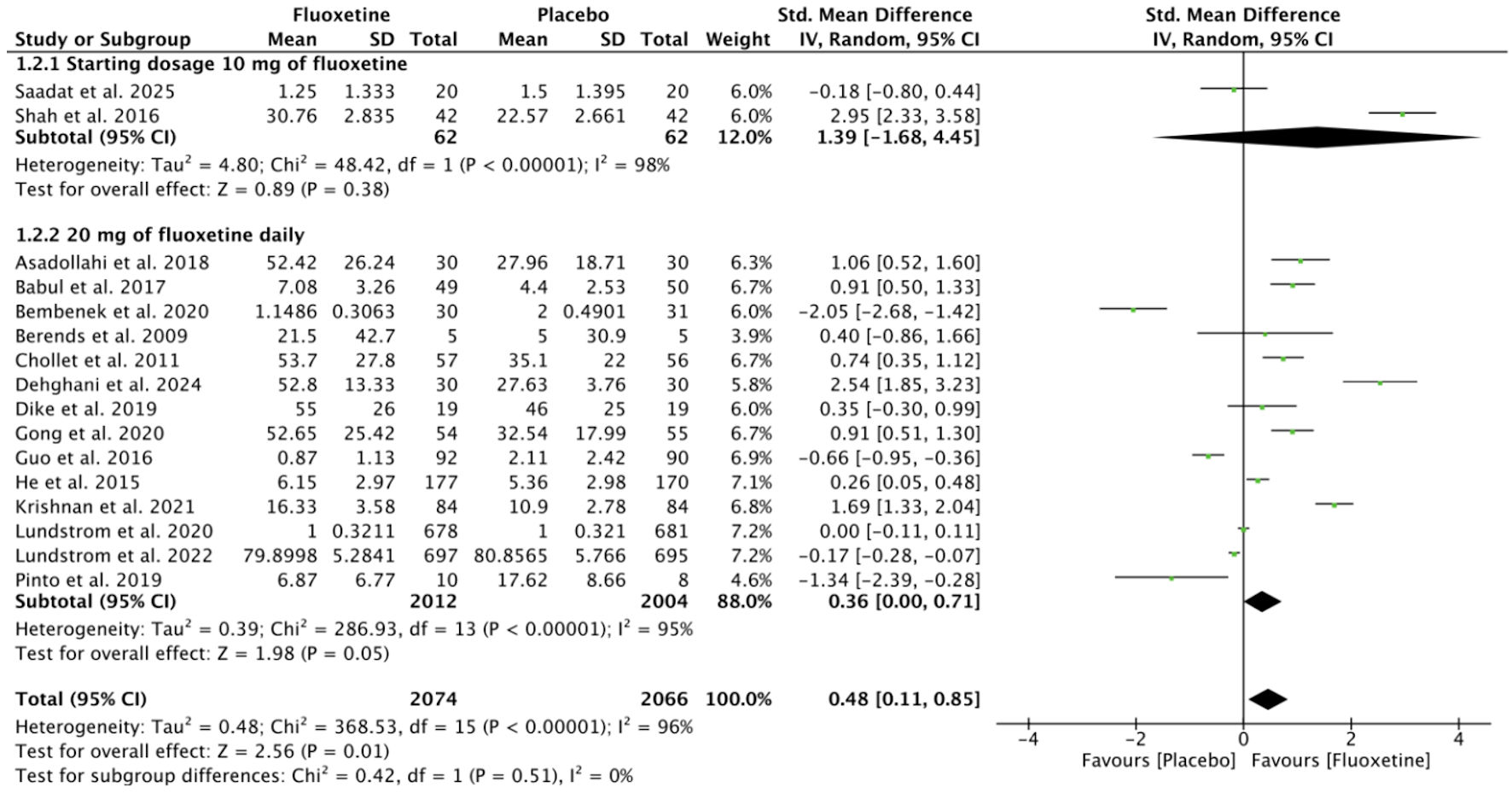
Results: Out of 1,173 identified studies, 23 RCTs comprising a total of 12,041 post-stroke patients met inclusion criteria. Fluoxetine significantly improved motor recovery (P = 0.01), particularly with a 90-day treatment duration (P = 0.006) at a daily dose of 20 mg (P = 0.05). HRQoL also improved significantly (P = 0.002). However, fluoxetine use was associated with a higher risk of adverse events (P < 0.00001), notably bone fractures (P < 0.00001), seizures (P = 0.009), and hyponatremia (P = 0.007).
Conclusions: Fluoxetine may offer benefits in enhancing motor recovery and HRQoL in post-stroke patients, especially when administered as a 90-day course at 20 mg/day. However, the increased risk of serious adverse events including bone fractures, seizures, and hyponatremia highlights the importance of careful patient selection and monitoring during treatment.
Published
Issue
Section
License
Copyright (c) 2026 The authors

This work is licensed under a Creative Commons Attribution 4.0 International License.